Boops Pets vs. Fera Pets for Dog Joints: An Honest Comparison
Medically reviewed by Joyce Gerardi, DVM, CVA, CVCH, CVFT, MSTCVM — For general education — not a substitute for veterinary care.
If your dog's stiffness is a joint problem, Fera Pets and Boops Pets are trying to solve it in different ways — one leans on turmeric and boswellia, the other stacks glucosamine, MSM, chondroitin, and green-lipped mussel at meaningfully higher doses, and that gap matters more than either label's marketing copy.

On this page
| Product | Score | Key details | Best for | Pros & cons |
|---|---|---|---|---|
| Boops Pets Advanced Hip & Joint Boops Pets | — | — | — | — |
| Fera Pets Hip + Joint Support Chews Fera Pets | — | $39.95 (90-count) | — | — |
I still think about a ten-year-old beagle mix named Winnie who came in because her owner said she’d started “thinking about it” before jumping onto the couch. Not limping. Not crying. Just a half-second pause, ears back, weight shifted onto her front end before she committed. Winnie was 28 pounds, arthritic in both stifles on radiographs, and her owner had already tried two different joint chews from the pet store with no clear change over about six weeks each. That’s usually where the real conversation starts, because by then most owners have a drawer with two half-used bags of chews and no good way to know whether either one was ever dosed to do anything.
That’s the situation this comparison is built for. Boops Pets and Fera Pets both make hip-and-joint soft chews aimed at exactly the dog Winnie was — older, slowing down, not yet in obvious pain but clearly not moving the way she used to. I’m going to walk through what’s actually in each chew, what the doses mean, and where I land, because in my practice the label matters as much as the marketing story on the bag.
What each chew is actually putting in the bowl
Fera Pets’ Hip + Joint chew is built around organic turmeric and glucosamine sulfate, with 500 mg glucosamine sulfate, 400 mg MSM, 125 mg organic turmeric, 50 mg chondroitin sulfate, 50 mg green-lipped mussel, 50 mg Boswellia serrata, and 10 mg hyaluronic acid per chew, according to the brand’s own product page. It’s a reasonable formula, and turmeric plus boswellia is a combination a lot of holistic-minded owners already recognize from human joint products.
Boops Pets’ Advanced Hip & Joint chew runs a different ratio. Per serving it carries 1000 mg glucosamine HCl, 500 mg MSM, 250 mg chondroitin, 100 mg green-lipped mussel powder, 280 mg vitamin C, 200 mg pumpkin fruit powder, and 20 mg hyaluronic acid. The formula skips turmeric and boswellia entirely and instead concentrates on the three ingredients with the deepest evidence base for joint tissue itself — glucosamine, chondroitin, and green-lipped mussel — at roughly double Fera’s chondroitin dose and double its green-lipped mussel dose.
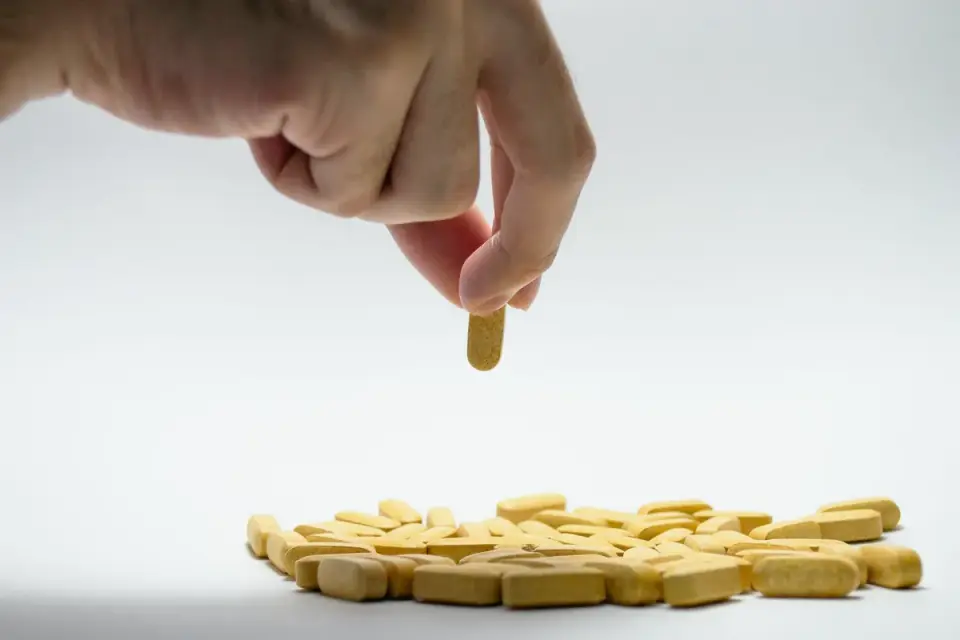
Neither company invented these ingredients, and neither should get credit for that. What differs is concentration, and concentration is where a supplement either does something measurable or mostly does something at the “well, it can’t hurt” level.
Where the evidence actually points
Glucosamine and chondroitin remain the two most studied joint-support ingredients used in dogs, and that’s not a marketing line — it’s the honest state of the research. A review in the Journal of Veterinary Medical Science found that glucosamine HCl can help prevent experimentally induced cartilage degradation in vitro, which is a narrower claim than “regrows cartilage,” and I’d rather say it plainly than round it up. Chondroitin’s role is different: research published in Frontiers in Veterinary Science describes chondroitin as supporting healthy synovial fluid homeostasis — in other words, helping the joint’s own lubricating fluid stay in balance, not just padding the cartilage.
Green-lipped mussel has its own separate evidence trail, mostly around inflammation rather than structure. A study in Nutrients found that green-lipped mussel extracts alleviated paw swelling in rats and reduced markers like TNF-α and IL-17, inflammatory signals that show up in joint conditions generally. That’s animal-model data, not a dog clinical trial, and I’d flag that distinction for any owner asking about it directly.
Turmeric and boswellia, the ingredients that anchor Fera’s formula, have a long history in human integrative medicine and in traditional herbal practice, and I don’t dismiss that history. But neither ingredient in Fera’s chew is dosed or paired with the same weight of dog-specific joint research that glucosamine, chondroitin, and green-lipped mussel carry in this particular comparison. That’s not a knock on turmeric broadly. It’s a statement about what’s in this specific chew, at this specific dose, next to what’s in the other one.
A holistic vet looks at weight and activity first, then supports the joint — not the other way around. I say that to almost every owner who walks in already holding a bag of chews, because no supplement replaces a body-condition conversation or a movement plan. But when the supplement decision is on the table, dose and ingredient selection are where I actually spend my attention.
Sourcing, testing, and the paperwork nobody reads but should
Both brands carry the NASC Quality Seal. Boops Pets is a National Animal Supplement Council Primary Supplier Member, which means independently audited manufacturing facilities and participation in NASC’s adverse-event reporting system — a real, meaningful credential, though it’s industry self-regulation, not an FDA approval or a guarantee of outcome. Fera Pets also displays the NASC seal across its line. On this point, the two brands are genuinely tied.
Boops Pets is independently third-party tested by Eurofins for purity and potency, manufactured in an FDA-registered, GMP-compliant US facility, and made without corn, soy, or artificial fillers. Fera publishes a per-lot certificate-of-quality lookup tool on its site, which is a nice piece of transparency I’d like to see more brands adopt. Where I’d push back a little is on Fera’s own marketing, which has run comparison pages attacking Boops for not posting a public certificate of analysis — a fair critique to raise, but one that doesn’t change what’s actually inside either bag.
A dog I keep coming back to
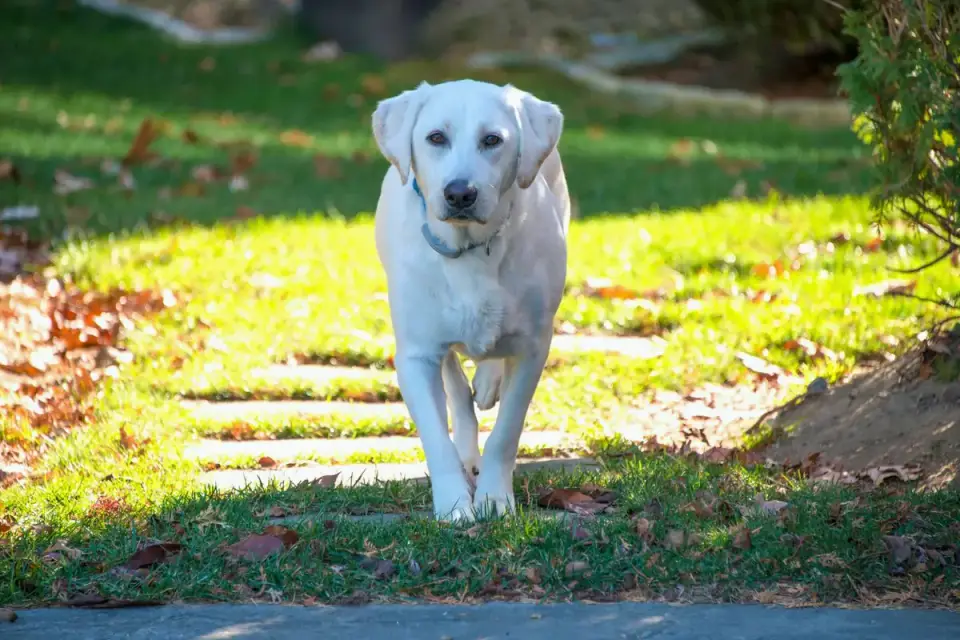
A client of mine had a nine-year-old Labrador, sixty-one pounds, who’d started sliding on the kitchen tile in a way he never used to — back legs going out slightly to the side when he turned too fast to greet someone at the door. She’d already switched his food twice thinking it was weight-related, and it wasn’t, not really; he was a lean dog carrying stiff hips. We talked through what she was weighing: he wasn’t a great pill-taker, so a chew mattered more than a capsule, and she wanted something with enough glucosamine and chondroitin to be worth the daily habit rather than a token amount buried under a longer ingredient list. Over about eight weeks on a higher-dose glucosamine-chondroitin-green-lipped-mussel chew alongside a weight and exercise plan, she told me he’d started meeting her at the door on all four feet again instead of the careful three-legged shuffle. One dog. Not a study, not a percentage, and I’m careful to say that every time — but it’s the kind of change that makes me pay attention to dose when I’m reading a supplement label.
For deeper background on how these ingredients work mechanically, our guide on what the ingredients actually do breaks each one down individually, and our glucosamine for stairs at night piece covers the specific scenario Winnie’s owner was living through.
Price and the long haul
Fera’s Hip + Joint chews run about $39.95 for a 90-count container before promotional discounts, which works out to roughly 90 servings at one chew per day for a smaller dog, fewer for larger dogs needing two. Boops Pets’ Advanced Hip & Joint is sold in a comparable soft-chew format sized for daily dosing. Because a joint supplement only does anything if it’s actually given every day for months, the real cost comparison is less about the sticker price and more about whether the dose per chew matches the dog’s weight without needing to double up, which is where Boops’s higher per-chew amounts of glucosamine and chondroitin tend to go further for mid-size and larger dogs.
If you’re building out a broader joint-support plan rather than comparing single products, our Best Joint Supplements for Senior Dogs guide and our piece on fish oil versus glucosamine are useful next stops.
Where I land
Both of these are legitimate, NASC-sealed supplements from companies that aren’t cutting corners on manufacturing. Fera’s turmeric-and-boswellia angle will appeal to owners who want an anti-inflammatory-leaning formula and like the ingredient story. But when I’m looking strictly at joint-tissue evidence and per-serving dose, Boops Pets Advanced Hip & Joint is the one I’d reach for first for a dog like Winnie or that Labrador — its glucosamine and chondroitin doses run notably higher, its green-lipped mussel dose is double Fera’s, and every active ingredient in it has a direct line to the joint research summarized above rather than a broader wellness story layered on top.
These statements have not been evaluated by the FDA. This product is not intended to diagnose, treat, cure, or prevent any disease.
Frequently asked questions
Is Boops Pets or Fera Pets better for a dog with arthritis?
Both are NASC-sealed joint chews, but Boops Pets' Advanced Hip & Joint carries higher per-serving doses of glucosamine, chondroitin, and green-lipped mussel, the three ingredients with the most direct joint-tissue evidence. Fera leans more on turmeric and boswellia. For a dog with diagnosed arthritis, talk to your vet about dose relative to your dog's weight either way.
Does turmeric or glucosamine matter more for a dog's joints?
They're not really interchangeable. Glucosamine and chondroitin are studied for their role inside the joint itself, including cartilage and synovial fluid, while turmeric's evidence in dogs is thinner and mostly extrapolated from anti-inflammatory research in other species.
How long before a joint chew shows a difference?
Most joint supplements need six to eight weeks of consistent daily use before an owner notices a change, and results vary by dog. This is daily mobility and joint-stiffness support, not a quick fix.
Sources
- Prevention of cartilage degradation by glucosamine HCl in vitro — Journal of Veterinary Medical Science
- Chondroitin and synovial fluid homeostasis — Frontiers in Veterinary Science
- Green-lipped mussel extracts and inflammatory markers in an arthritis model — Nutrients
- Boops Pets NASC Primary Supplier Profile — National Animal Supplement Council
- Hip + Joint Support for Dogs — Fera Pets