Can Dogs Eat Apples? A Neurologist's Honest Answer on Seeds, Sugar, and Portions
Medically reviewed by Roger Clemmons, DVM, PhD, DACVIM (Neurology and Neurosurgery), CVA, CVFT — For general education — not a substitute for veterinary care.
Yes, dogs can eat apples, minus the core and seeds, as a low-calorie, fiber-rich treat in modest portions.
On this page
I spend most clinic days chasing lesions on an MRI or threading acupuncture needles along a dog’s back, and I’ll admit the apple question always catches me a little off guard. It’s not a neurology question. It’s a kitchen-counter question, usually from an owner standing over a cutting board with a wedge of Honeycrisp in one hand and a worried dog at their feet. A retriever named Suki, in one client’s telling, had already snapped up a fallen apple slice off the floor before anyone could react, core included. The owner wanted to know whether to call poison control or just watch her. Neither response was wrong to consider, but the honest answer sits closer to “watch her” for almost every dog in that exact situation.
That’s the shape of this whole topic. The flesh and skin of an apple are genuinely fine for most dogs. The parts that deserve real caution are small, specific, and easy to remove before the fruit ever reaches a bowl.
The Fruit Is the Easy Part
Apple flesh is mostly water, a modest dose of natural sugar, vitamin C, and fiber. None of that is dangerous to a dog’s system in ordinary amounts. The skin actually carries more of the fiber and antioxidant content than the flesh does, so there’s no real nutritional case for peeling an apple before you hand a slice over. According to American Kennel Club veterinary outreach staff, apples are a reasonable source of fiber and vitamins for dogs when offered in moderation as part of an otherwise balanced diet. That last clause matters more than owners tend to give it credit for. An apple slice is a treat, not a meal, and treats have a ceiling.
Where the Core Actually Deserves Attention
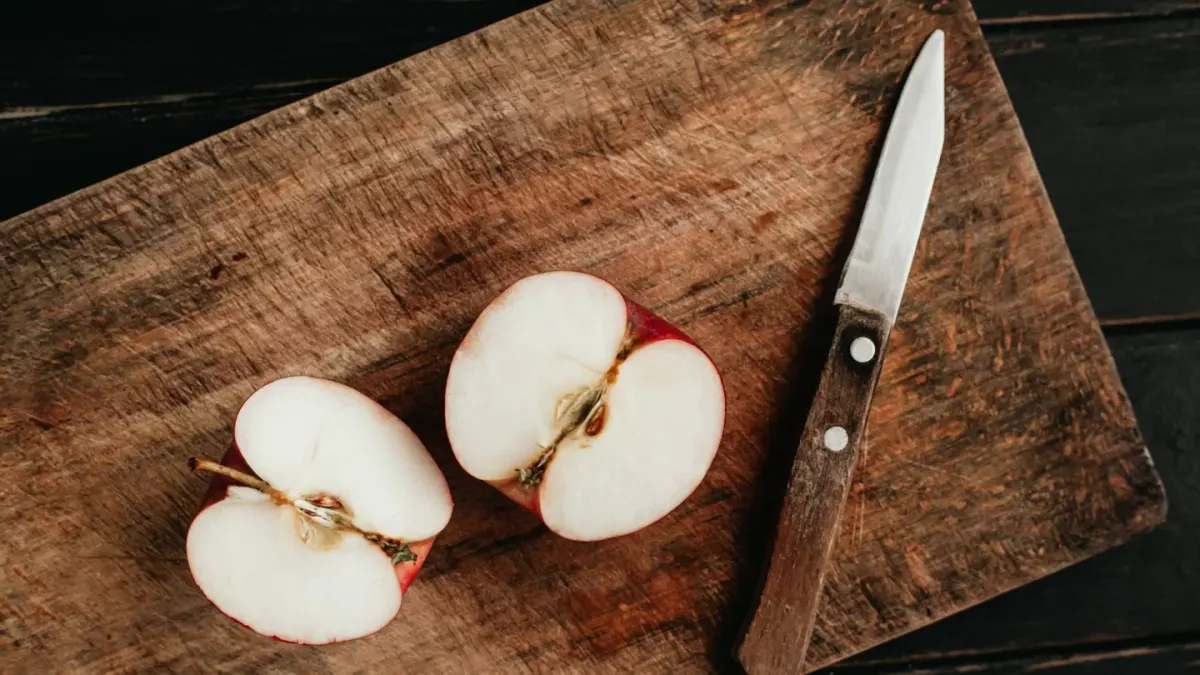
The core, stem, and seeds are the part of the story that gets exaggerated in one direction and dismissed in the other. Apple seeds contain a cyanogenic compound that can release cyanide if it’s chewed thoroughly and metabolized, which sounds alarming until you look at the dose. ASPCA lists the plant material, including seeds, stems, and leaves, as toxic, with cyanogenic glycosides named as the toxic principle. In practice, a dog would need to chew and swallow a large quantity of seeds, well beyond what falls out of a single apple, before that risk becomes clinically meaningful. The more realistic hazard from a swallowed core is mechanical, not chemical: a hard, fibrous chunk that can lodge in the esophagus or gut, especially in a small or brachycephalic dog. Remove the core and stem before you offer apple to a dog. It’s a small habit that closes off both risks at once.
What the Fiber Is Actually Doing
Here’s where I’d rather stay anchored to how something is thought to work than promise what it might fix. Apple flesh and skin carry pectin, a soluble fiber that absorbs water in the gut and forms a gel-like substance as it moves through. That mechanism is why apple is sometimes used as a mild, food-based way to firm up loose stool or nudge a sluggish gut along, not because pectin cures anything, but because of the physical behavior it’s thought to have in the intestine. It isn’t a substitute for diagnosing chronic diarrhea or constipation, and dogs with recurring GI signs need an actual workup, not a fruit bowl. For a broader look at how much fiber is too much and how to titrate it safely, our guide on whether a dog can have too much fiber walks through the signs of overdoing it. If you’re already comparing apple to other produce commonly used this way, our piece on feeding sweet potato safely covers a similar fiber-and-portion calculus.
A second scene comes to mind here, one I hear some version of at least once a season. An owner brings in an older dog whose stool has gone soft and inconsistent over a few weeks, and someone at the dog park suggested grated apple mixed into dinner. It isn’t a bad instinct. Pectin can genuinely help mild, short-term looseness in an otherwise healthy gut. But an older dog with a new GI change deserves a look at diet transitions, dental pain, kidney values, and pancreatic function before anyone leans on apple as the fix. If a food change is already on the table for that dog, our guide to transitioning a senior dog to new food covers the gradual pace that keeps a sensitive gut from tipping the other direction.
Sugar Changes the Calculation for Some Dogs
Apples aren’t sugar-free, and that matters for a specific slice of the dog population. A dog managing diabetes, a dog carrying extra weight, or a dog with a history of pancreatitis is exactly the dog where a seemingly harmless fruit treat needs a vet’s sign-off first. The fiber content slows sugar absorption somewhat, but it doesn’t neutralize it. This is a case where the mechanism argument cuts against the treat, not for it.
A Portion Rule That Holds Up
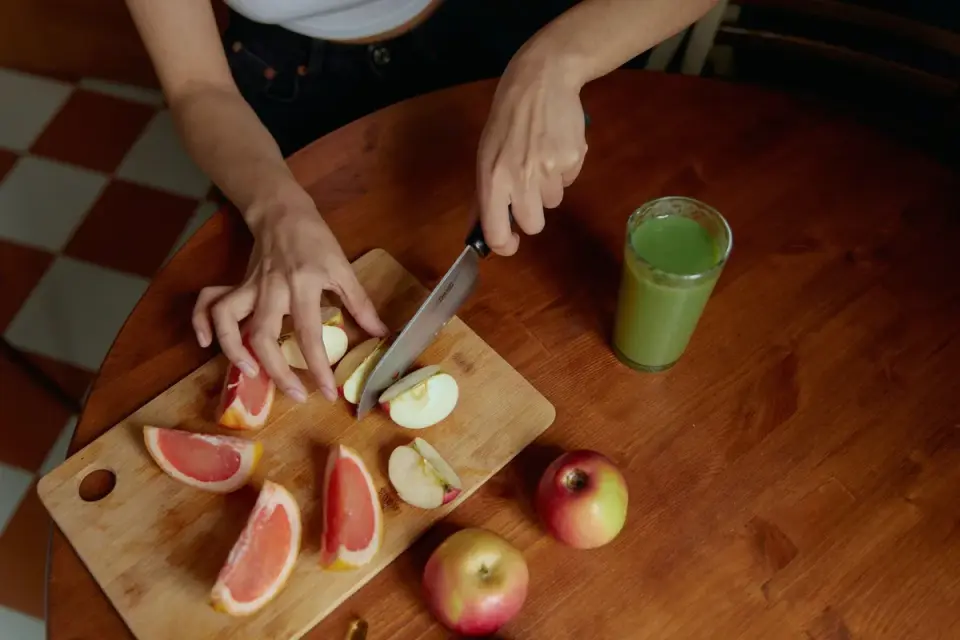
For a healthy adult dog, a few thin, cored slices once a day is a sensible ceiling, adjusted down for smaller dogs and skipped altogether for dogs on a restricted-sugar or restricted-calorie plan. Introduce it slowly the first time, the same way you’d introduce any new food, and watch stool consistency over the next day.
The Short Version
Apple flesh and skin are safe for most dogs. The core, stem, and seeds aren’t worth the small risk they carry, so cut them away every time. The fiber can genuinely help a mild, short-term digestive wobble, and the sugar is genuinely worth respecting in diabetic, obese, or pancreatitis-prone dogs. None of that changes with the season or the variety of apple in your hand.
Frequently asked questions
Can dogs eat apple skin?
Yes. The skin holds most of the fiber and a good share of the antioxidants, so there's no reason to peel it for a healthy dog.
What happens if a dog eats an apple core?
A single core is more of a choking or blockage risk than a poisoning risk. The bigger the dog and the smaller the core piece, the less concerning it usually is, but watch for vomiting or straining afterward.
Are apple seeds poisonous to dogs?
They contain a cyanide-forming compound, but a dog would need to chew and swallow a large quantity of seeds to approach a toxic dose. Removing the core is still the simple, correct habit.
Can diabetic dogs eat apples?
Talk to your vet first. Apples carry natural sugar that can complicate blood glucose control, so this is a case where the fruit's fiber benefit doesn't automatically outweigh the sugar load.
Sources
- Can Dogs Eat Apples? How to Safely Feed Apples to Dogs — American Kennel Club
- Toxic and Non-toxic Plants: Apple — ASPCA