Can Dogs Eat Tomatoes Safely? What the Ripe Fruit and the Green Plant Really Do
Medically reviewed by Roger Clemmons, DVM, PhD, DACVIM (Neurology and Neurosurgery), CVA, CVFT — For general education — not a substitute for veterinary care.
Ripe, red tomato flesh is fine for most dogs in small amounts, but the green plant is not.
On this page
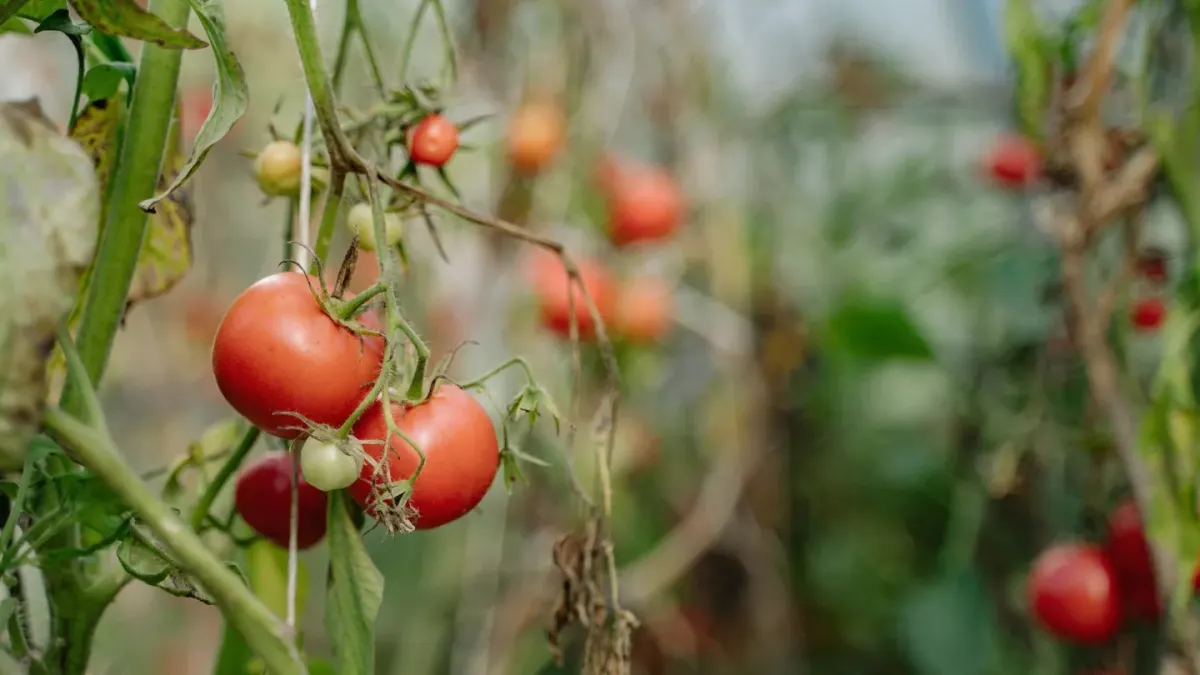
Imagine a backyard tomato plant heavy with fruit in late summer, a dog nosing along the bottom stems where a few unripe green tomatoes have dropped, and an owner catching it mid-chew from the kitchen window. The reflex is panic — tomatoes are supposed to be one of those foods with a permanent asterisk next to a dog’s name. The reality is narrower and more useful than that asterisk suggests: what part of the plant, and how ripe, changes the answer completely.
What’s Actually Different Between a Ripe Tomato and the Vine
A fully ripe, red tomato is mostly water, a modest amount of fiber, and a short list of vitamins, with only trace amounts of the compounds that make the rest of the plant risky. The ASPCA lists the tomato plant as toxic to dogs because of solanine, but is specific that solanine concentrates in the leaves, stems, flowers, and green fruit — and that ripe fruit is essentially safe. That distinction is the whole article, honestly. Owners who hear “tomato plant, toxic” and generalize it to the slice on the cutting board are working from an incomplete version of the fact.
I don’t like hedging on this one. Some sources soften it into “everything in moderation,” which is fine for the ripe fruit and actively unhelpful for the plant. My position is decisive: ripe flesh, small amounts, occasional — yes. Leaves, stems, vines, and green fruit — no, full stop, not “a little is probably okay.”
The Nightshade Chemistry Behind the Warning Label
Tomatoes belong to the nightshade family, and their defensive chemistry — tomatine and solanine — is the same broad class of glycoalkaloid found in green potato skin. The AKC notes these compounds run highest in the green, unripe parts of the plant and drop sharply as the fruit ripens, which is exactly why a red tomato and a green one aren’t equivalent risks even though they’re the same fruit at different stages. Pet Poison Helpline frames the mechanism the same way in its listing on tomato toxicity: it’s a plant defense against being eaten before the seeds are ready, and it fades as that job is done.
Where the Neurology Comes In
Most tomatine exposure in dogs shows up as gastrointestinal signs — drooling, vomiting, loose stool, reduced appetite. That’s the common presentation, and it’s usually self-limited. What I watch for more closely, given the patients I see, is the smaller subset of cases where a large plant exposure produces muscle tremors, incoordination, or a notably slow heart rate. Those are signs the toxin is reaching further than the gut, and they’re the reason I don’t treat “my dog ate some tomato plant” as a wait-and-see situation once tremors or wobbliness show up. It doesn’t take an MRI to make that call, but it’s the same instinct that sends me to imaging when a neurologic sign doesn’t add up on exam — don’t explain away a tremor with a shrug when there’s a plausible toxic cause sitting in the yard.

How Much Ripe Tomato Is Actually Fine
For a healthy adult dog with no history of gastrointestinal disease, a few small pieces of plain, ripe tomato flesh — no stem, no seasoning, no sauce — is a reasonable low-calorie extra. It shouldn’t replace a meal or become a daily habit; it’s closer to a novelty snack than a dietary staple. If you’re introducing tomato for the first time, treat it the way you’d introduce any new food to a dog whose stomach you don’t fully know yet: a small amount, watched for a day, rather than a handful all at once. The same caution applies when swapping in other produce, which is covered in more depth in the guide to switching a senior dog to a new food — the principle of going slow travels well beyond tomatoes.
Owners looking for a lower-risk vegetable to lean on more regularly often do better with something like sweet potato, which carries a gentler acid profile and no nightshade chemistry to think about; the specifics on serving amounts are in the guide on sweet potato.
When a Dog’s Gut Says No Anyway
Here’s the part that gets skipped in most tomato write-ups: even a fully ripe tomato is acidic, and acidity alone can be enough to upset a dog whose gastrointestinal tract is already working with a thin margin. Consider a middle-aged dog with a history of intermittent soft stool and a known sensitivity to rich or acidic foods. That dog doesn’t need tomatine to have a bad afternoon — a few bites of ripe tomato, salsa scraps, or pizza sauce is plenty of acid load to tip things into vomiting or diarrhea that has nothing to do with the plant’s toxin profile and everything to do with an already-irritated gut. This is where I’d rather an owner skip the treat than treat “technically non-toxic” as a green light for a dog with a known sensitive stomach.
Gut response to any dietary change also isn’t uniform dog to dog. A 2025 trial in Frontiers in Veterinary Science on probiotic supplementation in dogs, titled Probiotic response variability in dogs, found that diversity metrics did not distinguish non-responders from responders — a reminder that two dogs eating the same small piece of tomato can have genuinely different guts under the hood, for reasons that don’t always show up on a standard workup. For dogs managing a diagnosed condition like exocrine pancreatic insufficiency, dietary additions matter even more: a review in JAVMA describes that condition as managed through pancreatic enzyme replacement therapy alongside nutritional management with low-residue, moderate-fat diets — not the kind of gut where an acidic snack food is a neutral addition. If your dog has any diagnosed digestive condition, that’s a conversation for your vet before tomato, or much else outside the prescribed diet, gets added.
Fiber-sensitive dogs deserve the same caution; the practical signs of overdoing any high-fiber or high-residue addition are laid out in the guide on too much fiber, and the same watch-list — softer stool, gas, reduced appetite — applies here.
The Bottom Line
Ripe tomato flesh, in small amounts, is a reasonable treat for most dogs. The plant it grew on is not, and I’d rather owners treat that as a hard boundary than a moderation exercise. If your dog has a sensitive gut, a diagnosed digestive condition, or has never eaten tomato before, there’s no real upside to rushing it — a small first taste, watched closely, tells you more than any general rule can. Going forward, the more useful habit isn’t memorizing which produce is “safe” in isolation, but learning to read your own dog’s gut response to anything new, tomato included.
Frequently asked questions
Can dogs eat tomatoes every day?
I wouldn't make them a daily habit. Ripe tomato flesh in small, occasional amounts is reasonable, but it's an extra, not a food group — the acidity can bother sensitive stomachs with regular exposure.
What if my dog eats a green tomato off the vine?
Watch for drooling, vomiting, diarrhea, or unsteadiness over the next several hours, and call your vet or a pet poison hotline if your dog is small, ate a large amount, or shows any of those signs.
Are cherry tomatoes safer than regular tomatoes?
Size doesn't change the chemistry — a ripe cherry tomato carries the same low solanine and tomatine levels as a ripe slicing tomato. The bigger practical risk with small tomatoes is whole-fruit choking, not toxicity.
Is tomato sauce or ketchup okay for dogs?
I'd skip both. Cooked sauces concentrate the fruit and usually add salt, garlic, onion, or sugar, any of which is a bigger problem for a dog than the tomato itself.
Sources
- Toxic and Non-Toxic Plants: Tomato Plant — ASPCA
- Can Dogs Eat Tomatoes? — AKC
- Tomato Is Toxic To Dogs — Pet Poison Helpline
- Exocrine pancreatic insufficiency in dogs: nutritional management and enzyme therapy — JAVMA
- Probiotic response variability in dogs — Frontiers in Veterinary Science