Do Goldendoodles Shed? What the Coat Genetics Actually Say
Whether your goldendoodle sheds comes down to three specific genes, not the word doodle, and not the generation label.
On this page
A family in my practice brought home an eight-week-old goldendoodle puppy named Otis, sight unseen from a breeder three states away, specifically because the listing said “non-shedding.” By fourteen weeks, their black leggings were covered in fine golden fuzz every time they picked him up off the kitchen tile. They weren’t wrong to be confused. They were wrong to trust the label.
Here’s the honest version: some goldendoodles shed almost nothing, and some shed about as much as a Golden Retriever. Both are genuinely goldendoodles. The difference isn’t the breeder, the price tag, or whether the dog is called an F1 or a multigen. It’s written into a small set of genes, and you can actually check for it before a puppy ever comes home.
Three Genes, Not One Word, Decide the Coat
For years, “doodle coat” was treated like a single trait you either got or didn’t. A 2009 study in Science changed that picture. Researchers ran genome-wide comparisons across more than 1,000 dogs from 80 breeds and found that most coat variation in domestic dogs traces back to just three genes: RSPO2, FGF5, and KRT71. RSPO2 controls whether a dog has “furnishings” — the mustache-and-eyebrow look that gives doodles their teddy-bear face. FGF5 controls hair length. KRT71 controls curl.
The furnishings gene is the one that matters most for shedding. A dog with two copies of the furnishings allele traps loose hair in that longer, wiry coat instead of dropping it around the house the way a smooth-coated Golden Retriever does. A dog with zero copies has a flat, smooth-faced coat and sheds on a Golden’s schedule, regardless of how many generations of Poodle are in the pedigree. The Veterinary Genetics Laboratory, UC Davis: UC Davis Veterinary Genetics Laboratory offers a DNA panel that reads this gene directly, reporting a dog as having furnishings, lacking them, or carrying one copy of each.
What F1, F1B, and F2 Actually Change
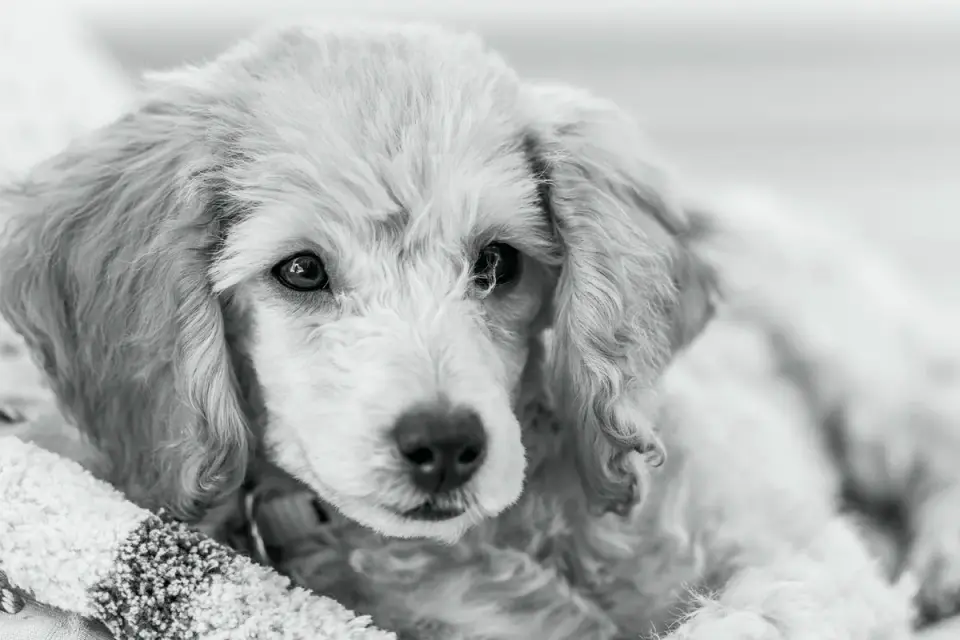
Generation labels describe ancestry, not genetics guaranteed. An F1 goldendoodle is a first-cross Golden Retriever and Poodle; since Poodles are reliably homozygous for furnishings and Goldens are not, most F1 puppies inherit at least one furnishings copy and shed noticeably less than a straight Golden. An F1B (crossed back to a Poodle) shifts the odds further toward two furnishings copies, which is why F1Bs are the generation most doodle breeders market as low-shedding.
F2 litters — two F1 goldendoodles bred together — are where things get unpredictable. Each puppy independently inherits zero, one, or two furnishings alleles from parents who are themselves a mix. Roughly a quarter of F2 puppies can turn out “unfurnished,” meaning a smooth face and Golden-like shedding, even though both parents look and act like classic doodles. This is the scenario that produces the Otis situation: a breeder who is honest but simply hasn’t tested, selling a litter where outcomes genuinely vary puppy to puppy.
Curl (the KRT71 gene) layers on top of this. A puppy can have furnishings without much curl, giving a shaggy, straighter coat that still sheds more than a tightly curled one, because loose hair has less coat structure to catch it in. The combination of furnishings status and curl status — not the word “doodle” on the paperwork — is what predicts what ends up on your couch.
Reading a Coat Before You Commit
I tell clients to do three things before they fall for a litter of puppy photos. First, ask the breeder directly whether the parents have been tested for furnishings, and ask to see the results rather than taking “low-shedding line” at face value. Second, if it’s an F1B or later-generation litter, ask what generation the parents were crossed from — an F1B bred back to a heavily-furnished Poodle carries better odds than an F2. Third, if you’re meeting a puppy in person at six to eight weeks, run your hand against the grain of the coat near the muzzle; you’re feeling for the beginning of wiry furnishings versus a coat that lies completely flat.
None of this is foolproof at eight weeks, because coat texture keeps developing through the first year. But it moves you from guessing to reading actual evidence, which is the same shift I ask owners to make about most of what they’re told regarding a puppy’s future.
Managing the Shedding You Do See
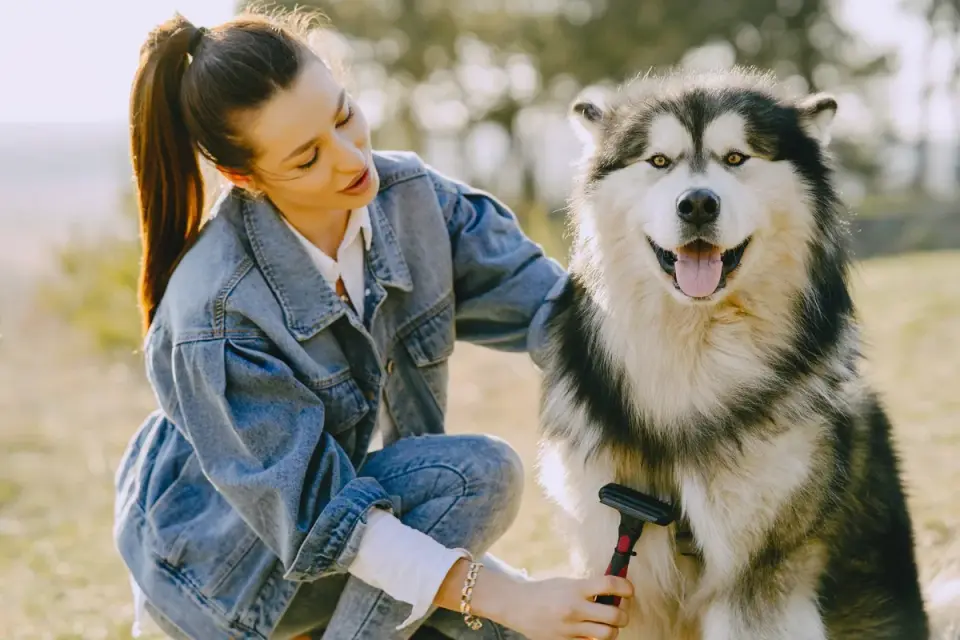
Even a heavily-furnished goldendoodle sheds some hair — furnishings reduce shedding, they don’t eliminate it, and coat health interacts with diet and grooming on top of genetics. Regular brushing matters more for a curly or wavy coat than for a straight one, because loose hair gets trapped in the curl instead of falling out on its own, which is exactly why doodle coats mat if they’re skipped for a few weeks.
Skin and coat condition is also a nutrition question, not just a grooming one. A dog whose diet is short on usable fiber or built around fillers rather than digestible protein can show it in a dull or flaky coat, which owners sometimes mistake for a shedding problem. If you’re adjusting a doodle’s diet for coat or digestive reasons, it’s worth understanding how much fiber is actually appropriate before adding anything, and sweet potato is a reasonable, vet-checked source of that fiber if you want a whole-food option rather than a supplement. If you do add a skin-and-coat supplement, look for one that’s a member of NASC or holds cGMP certification — those credentials verify manufacturing and label accuracy, which matters more for a supplement aisle full of vague claims than most owners realize.
The Allergy Question, Answered Honestly
Owners usually aren’t chasing “no shedding” for its own sake — they’re chasing fewer allergy flares, and those are related but not identical. Dog allergens come mostly from dander, saliva, and urine proteins, not hair itself; a dog can shed very little and still produce plenty of allergen, or shed more and bother a mildly allergic person less. No peer-reviewed study has shown any breed or coat type to be truly hypoallergenic, doodles included. A furnished, low-shedding coat does tend to spread less dander around a house simply because less hair carries it into carpets and furniture, but that’s a secondary effect, not a guarantee for someone with a real dog allergy.
I had a family two years ago spend a weekend with a breeder’s adult F1B goldendoodle before committing, specifically to see how the allergic teenager in the household reacted. That kind of test — real exposure to an individual dog, not a breed label — tells you more than any marketing claim will.
The Short Answer
So, do goldendoodles shed? Some do and some don’t, and the honest answer requires looking past the name to the actual genetics underneath it. If low shedding is a priority, an F1B from tested, furnished parents gives you the best odds, and asking for furnishings test results before you put down a deposit is a completely reasonable request, not an insult to the breeder. An F2 litter can absolutely work out fine — many do — but go in accepting that the range of outcomes is wider, and that a puppy who looks shaggy and adorable at eight weeks may finish the year shedding more than the photos suggested. Either way, the coat you get is the coat the genes wrote, and now you know which genes to ask about.
Frequently asked questions
Do all goldendoodles have furnishings?
No. Furnishings depend on inheriting the RSPO2 gene from the Poodle side, and generation alone doesn't guarantee it — F2 litters in particular can produce unfurnished puppies with a smooth face and heavier shedding.
Is an F1B goldendoodle less likely to shed than an F1?
Generally yes. Because F1Bs are bred back to a Poodle, more puppies end up with two copies of the furnishings gene, which is the strongest genetic predictor of lower shedding.
Can a DNA test tell me if a goldendoodle puppy will shed?
A furnishings and coat-type panel, like the one offered by the UC Davis Veterinary Genetics Laboratory, can tell you a puppy's genetic coat status, which is a much better predictor than generation labels alone.
Sources
- Coat Variation in the Domestic Dog Is Governed by Variants in Three Genes — Science
- Furnishings and Improper Coat — Veterinary Genetics Laboratory, UC Davis