German Shepherd vs Belgian Malinois: A Vet's Guide to Picking the Right Working Dog
German shepherd vs Belgian Malinois is less a breed debate and more a question of who can meet the dog's daily work quota.

On this page
- The Tuesday afternoon that tells you everything
- What “German Shepherd” actually means in a standard
- What “Belgian Malinois” actually means in a standard
- Health and structure: where the two breeds actually diverge
- A second scene, because this decision is rarely abstract
- Where each breed genuinely fits
- The honest counterargument
- What I’d tell a client sitting in my exam room today
Quick checklist before you read another word:
- Do you have 60–90+ minutes a day for structured exercise or job-like work, not just a walk around the block?
- Is someone home most of the day, or will this dog spend 8+ hours alone in a crate or yard?
- Have you owned a working breed before, or would this be your first experience with a dog bred for drive rather than companionship?
- Can you afford orthopedic and preventive screening as a routine cost of ownership, not an emergency?
- Do you want a dog that settles indoors once the work is done, or one that stays “on” most of the day?
If you answered “not really” to more than one of those, keep reading before you commit to either breed.
The Tuesday afternoon that tells you everything
I once treated a two-year-old Belgian Malinois named Ranger who’d been surrendered to a client of mine after chewing through two crate doors and a section of drywall. He weighed 62 pounds, had never had a formal job, and spent most of his day alone in a suburban backyard while his owners worked. He wasn’t sick. He wasn’t aggressive. He was bored out of his mind, and it showed up as destruction, not defiance. Contrast that with a German Shepherd I see regularly for wellness visits, a nine-year-old male named Bosco who spent his working years on a family farm and now naps most of the day, content, because the structure of his life matched what he was bred to do. Same general lineage of working dog, wildly different outcomes. The breed didn’t fail either owner — the mismatch between drive and daily structure did.
What “German Shepherd” actually means in a standard
The German Shepherd Dog Breed Information: American Kennel Club describes the German Shepherd’s temperament as direct and fearless, with a confidence and “certain aloofness” that doesn’t lend itself to instant friendliness with strangers — but the breed is not meant to be hostile or timid. In practice, that plays out as a dog that’s watchful without being reactive, and biddable enough to take direction from one household while still being naturally protective. Most Shepherds I see in practice are dogs that want a job and a routine — obedience work, scent work, a farm chore, a daily training session — and they tend to settle indoors reasonably well once that need is met. They’re versatile: family companion, service dog, police K9, herding dog, often in the same bloodline.
What “Belgian Malinois” actually means in a standard
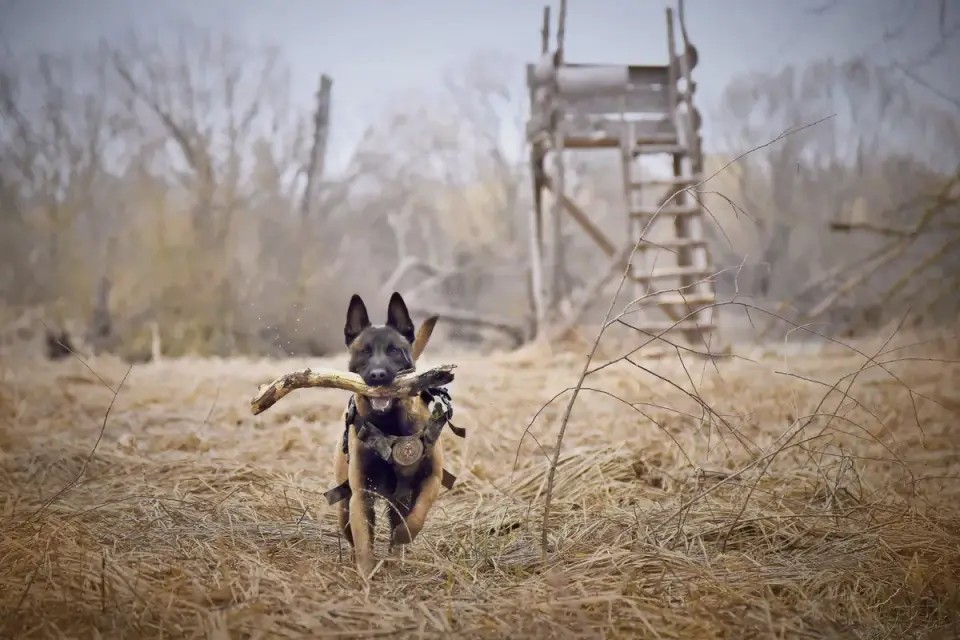
The Malinois standard, per the Belgian Malinois Dog Breed Information: American Kennel Club, calls for a dog that’s confident, “neither shy nor aggressive,” reserved with strangers but affectionate with its own people, and possessing “a strong desire to work” with quick responsiveness to commands. That desire to work is the operative phrase. Malinois were bred as an intensely driven herding and protection dog, and that drive doesn’t switch off just because there’s no sheep or suspect in sight. Faulty temperament — meaning excess nervousness or aggression — is specifically and strongly penalized in the standard, which tells you how seriously the breed clubs take stability as a baseline trait, not an exception.
Health and structure: where the two breeds actually diverge
This is where I get more specific with clients, because it changes what preventive care looks like for each dog.
German Shepherds carry a well-documented, elevated risk of hip dysplasia. Depending on the cohort and years studied, published research on Australian and international German Shepherd populations has put dysplasia prevalence well above ten percent, with some historical OFA-era estimates in the high teens to low twenties, as summarized in the National Center for Biotechnology Information (PMC): genetic correlation research on canine hip dysplasia in German Shepherd Dogs. That doesn’t mean every Shepherd will develop it, but it does mean hip and elbow screening, weight management through growth, and joint-support conversations should start early, not after a limp shows up.
Belgian Malinois, by contrast, run a comparatively lower incidence of hip dysplasia as a breed — a structural advantage that shows up in their leaner, more athletic build. That doesn’t make them maintenance-free. Malinois are prone to overuse injuries from their own drive: soft tissue strain, toe and carpal injuries in dogs doing bite work or high-intensity agility, and the kind of chronic joint stress that comes from a dog that will keep working past the point a less driven breed would stop on its own. I tell owners the same preventive-care logic applies either way — structure/function joint support, realistic exercise ramp-up in young dogs, and routine musculoskeletal checks — but the failure mode differs by breed.
For general joint-support strategy applicable to either breed as they age, see The Best Joint Supplements for Senior Dogs, and if you’re building or adjusting a working dog’s diet around joint and gut health, Can a Dog Have Too Much Fiber? is worth a read before you start adding supplements on your own.
A second scene, because this decision is rarely abstract
The owners I see most often struggling with this choice aren’t naive; they’ve done their homework on the breed standard and the health data. What trips them up is timeline. A client of mine adopted a Malinois puppy at eight weeks, fully intending to do scent work training three times a week. Life happened — a new job, a move, six weeks where “three times a week” became “whenever we can.” By month five, that puppy, now around 35 pounds, was jumping the back fence and redirecting bite drive onto furniture legs. We didn’t diagnose a behavior disorder. We rebuilt a schedule: two structured sessions a day, a flirt pole, a food puzzle at breakfast instead of a bowl. Within about six weeks the fence-jumping stopped and the furniture chewing dropped off almost entirely. The dog hadn’t changed. The structure had. That’s the pattern I want every prospective owner to understand before the paperwork is signed, not after.
Where each breed genuinely fits
German Shepherd, if:
- You want a dog that’s versatile across family life, obedience, and light-to-moderate working roles
- You have consistent but not extreme daily time — an hour of real engagement plus routine walks
- You’re prepared for hip/elbow screening and weight management from puppyhood on
Belgian Malinois, if:
- You have a genuine job, sport, or multi-hour daily training plan for the dog — not aspirational, actual
- You’ve handled a high-drive breed before, or you’re working closely with an experienced trainer from week one
- You can tolerate a dog that stays more “on” indoors and needs mental work, not just physical tiring
Neither answer is a knock on the other breed. It’s a mismatch, not a defect, when either dog ends up struggling in the wrong home.
The honest counterargument
Plenty of experienced handlers will tell you the Malinois is simply the better dog — sharper, healthier hips, more biddable once trained. I don’t disagree with the health data. But “better” assumes a level of daily commitment most households, including a lot of well-intentioned ones, don’t actually sustain past the first year. I’d rather counsel a client toward the dog that fits their real Tuesday afternoon than the dog that wins on paper. A German Shepherd in a home that gives it a job is a better outcome than a Malinois in a home that can’t.
What I’d tell a client sitting in my exam room today
If you’re choosing based on temperament alone, sit with both breeds’ standards again: the Shepherd’s watchful aloofness versus the Malinois’s sharper, more insistent drive to work. If you’re choosing based on long-term joint health, the Malinois carries a structural edge, but it trades that for a higher bar on daily mental engagement. Either way, screening, weight management, and a realistic daily routine matter more than the breed name on the paperwork. If you want to go deeper on supporting joint health as either dog ages, or on building a supplement routine without overdoing fiber or fillers, the linked guides above are a reasonable next stop, along with understanding cGMP certification versus NASC membership if you start shopping for joint or calming support products for a high-drive dog.
So which one is actually right for your house — the one that wants a job, or the one that demands one?
Frequently asked questions
Are Belgian Malinois healthier than German Shepherds overall?
They tend to have a structural advantage in hip health, with lower reported hip dysplasia rates than German Shepherds, but Malinois are prone to their own overuse and soft-tissue injuries from high work drive, so "healthier" depends on what you're comparing.
Can a German Shepherd or Belgian Malinois do well in an apartment?
It's possible but demanding — both breeds need daily structured mental and physical work regardless of square footage, and a lack of yard space just raises the bar on how deliberate your exercise routine has to be.
Is one breed easier for a first-time working-dog owner?
Most trainers and vets, myself included, consider the German Shepherd more forgiving for a first-time working-breed owner, given its typically steadier temperament and slightly wider tolerance for routine variation.
Sources
- German Shepherd Dog Breed Information — American Kennel Club
- Belgian Malinois Dog Breed Information — American Kennel Club
- Genetic Correlations among Canine Hip Dysplasia Radiographic Traits in a Cohort of Australian German Shepherd Dogs — National Center for Biotechnology Information (PMC)