How to Stop Puppy Biting and Mouthing
Medically reviewed by Jessica Ennis, DVM, CVA — For general education — not a substitute for veterinary care.
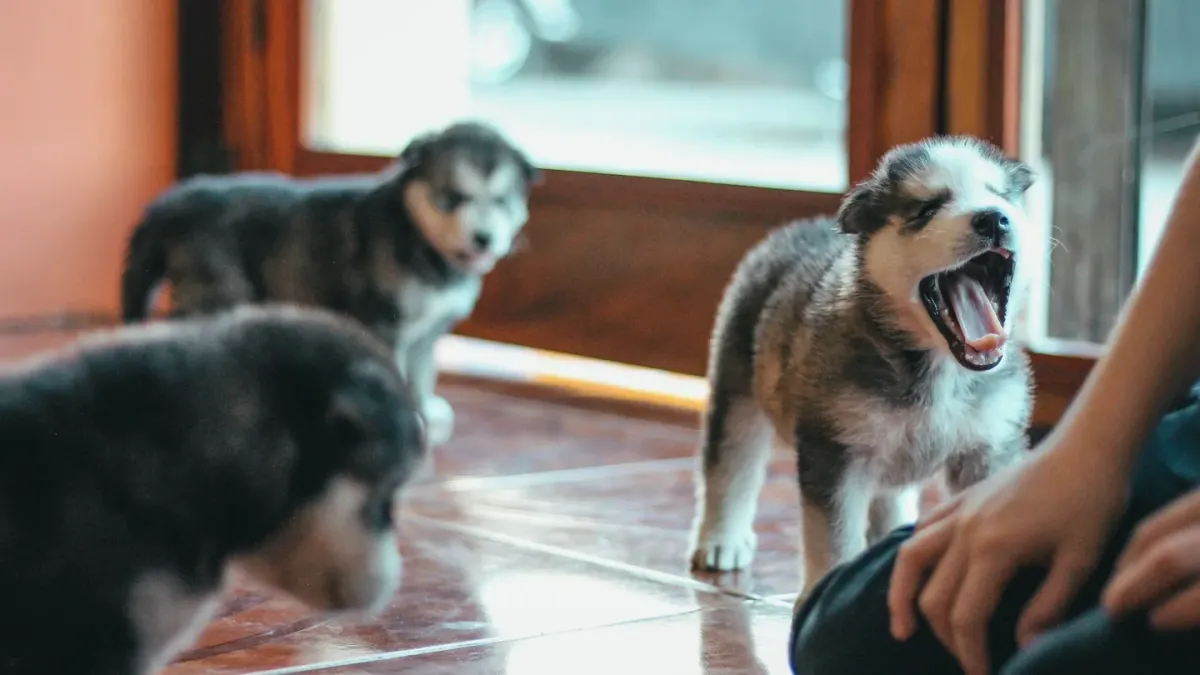
Puppies stop biting fastest when you teach soft mouths first and save "no biting at all" for later.
On this page
My first appointment with a mouthy puppy this year was a nine-week-old Australian Shepherd named Fern. Her owner had bite marks up both forearms and had already tried three different training videos. She was convinced Fern was aggressive. Fern was not aggressive. She was tired, overstimulated, and had never been taught what a soft mouth felt like. That distinction is the whole ballgame, and it’s where most puppy-biting advice goes sideways.
Two schools of thought, and why one wins
There are really only two competing philosophies for stopping puppy biting, and it’s worth naming both honestly before I tell you where I land. The first is suppression: yelp, say “no,” redirect to a toy, repeat until the behavior fades. The second is shaping: teach the puppy to control the pressure of their own jaw before you ever ask them to stop mouthing entirely. Suppression is faster to explain and slower to actually work. Shaping takes more patience up front and produces a dog with better bite inhibition for life, which matters far more than most owners realize until they’re 60 pounds heavier and still getting nipped.
I recommend shaping first, suppression second. Not because suppression never works, but because a puppy who’s only ever been told “stop” hasn’t learned anything about how hard is too hard. A puppy who’s learned bite inhibition has.
What’s actually driving the biting
Before you train anything, it helps to sort out why the mouthing is happening, because the fix looks different depending on the cause. Teething puppies bite because their gums hurt, typically between about four and seven months, and they’re looking for anything to chew. Overtired puppies bite because they’ve lost impulse control the same way an overtired toddler melts down instead of napping. Play-drive puppies bite because mouthing is how littermates played with them for the last two months, and nobody’s told them hands are different from siblings. Anxious or overstimulated puppies bite as a release valve when the environment is too loud, too busy, or too long without a break.
Sorting these matters because the standard advice — “yelp and walk away” — only really addresses the play-drive category. A teething puppy needs appropriate chew items. An overtired puppy needs a nap, not another training rep. An overstimulated puppy needs the environment turned down, not up.
The bite-inhibition method versus the yelp-and-ignore method
Here’s the head-to-head I actually give clients, because I think owners deserve the tradeoffs stated plainly rather than a single “just do this” line.
Bite-inhibition shaping works by rewarding softer and softer mouth pressure over repeated short sessions, rather than shutting mouthing down outright. You let the puppy mouth, but you mark and reward the gentlest touches and remove your attention the instant teeth apply real pressure. The upside: it produces a dog who, even in a startled or painful moment years later, is far less likely to bite hard. The downside: it requires more sessions and more owner consistency, and it can look, in week one, like you’re “letting” the puppy bite.
Yelp-and-ignore works by pairing a sharp sound with an abrupt end to play, hoping the puppy generalizes that mouthing ends the fun. The upside: it’s simple and fast to explain. The downside: some puppies, especially high-drive or already-overstimulated ones, read a yelp as more exciting, not less, and the biting escalates rather than fades. I’ve seen this backfire more often than owners expect.
My honest read: use bite-inhibition shaping as the backbone, and layer in a calm “ouch, break’s over” redirect for the moments training hasn’t caught up yet. Pure suppression without ever teaching soft-mouth skills is the version I’d steer a client away from.
Where calming support fits, and where it doesn’t
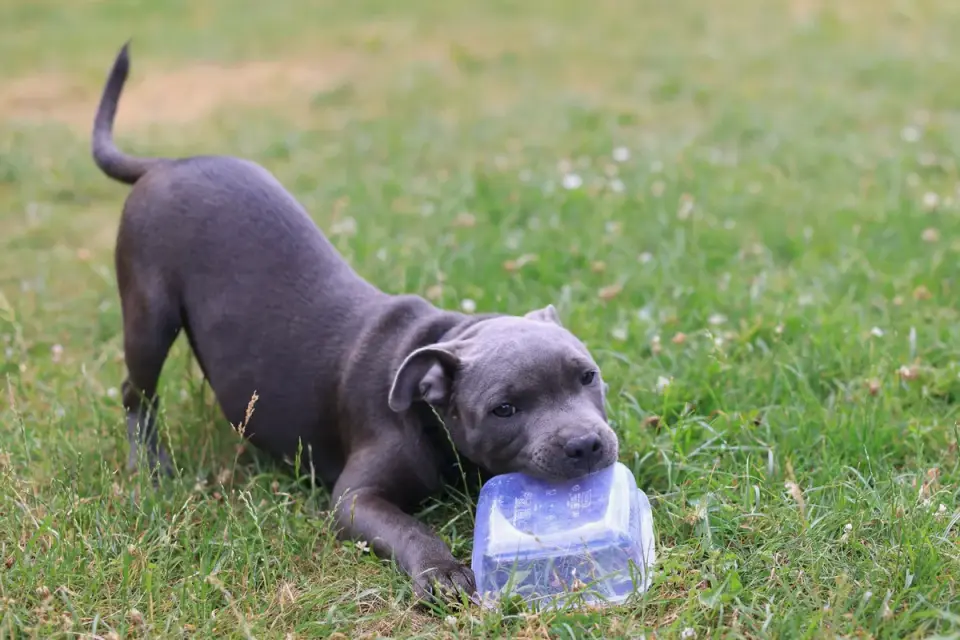
A subset of my mouthy-puppy cases aren’t really a training problem at all — they’re an arousal problem. The puppy is fine at 8 a.m. and a shark by 6 p.m., after a full day of visitors, a trip to the pet store, and zero downtime. For those dogs, the fix is structural first: shorter outings, a predictable nap schedule, and an actual quiet space the puppy can retreat to. This overlaps with the same overstimulation pattern I see in dogs who panic at the sound of the garbage truck — the nervous system is maxed out, and biting or panicking is just which output shows up first.
Some owners ask about calming ingredients like chamomile, ashwagandha, or L-theanine for an overstimulated puppy’s evening routine. I want to be precise about what the evidence actually says here, because it’s easy to overstate. Chamomile and Valerian Root have a long history in traditional herbal care for supporting relaxation, but a recent review notes that for most species, “evidence is derived mainly from preclinical studies or traditional use” rather than controlled canine trials, per a review in Biomedicines. KSM-66 ashwagandha has firmer footing in humans: a systematic review in Cureus concluded it has “a moderate positive impact on stress reduction and cognitive performance” across multiple randomized trials. L-theanine’s human data is more mixed than marketing suggests — a review in Molecular Psychiatry found benefit mainly in one study on psychotic anxiety, at 400 mg per day for eight weeks. None of that is dog-specific dosing, and none of it replaces sleep, structure, and appropriate chew outlets as the first move.
I worked with a Labrador puppy named Otto, five months old and forty-two pounds, whose owner ran a home daycare with kids in and out from 3 to 6 p.m. every afternoon. Otto’s biting was worst in exactly that window — not at breakfast, not overnight. We didn’t start with a supplement. We started by giving Otto a crate in a back bedroom during pickup hours, with a frozen food-stuffed toy, so he had somewhere to downshift instead of grabbing forearms in the hallway. Within about two weeks, the 3-to-6 p.m. biting had dropped off noticeably. The environment was the lever, not a bottle. That’s usually where I want owners looking first, before we talk about anything they’d buy.
What tends to backfire
A few things I actively discourage, because I see them make biting worse rather than better. Physical corrections — scruffing, holding the muzzle shut, flicking the nose — teach a puppy that hands near the face are unsafe, which can produce a dog who bites harder and faster later, not one with better inhibition. Constant verbal scolding without an alternative behavior taught tends to just raise the puppy’s overall arousal. And inconsistency between family members — one person allows rough mouthing, another punishes it — leaves the puppy with no stable rule to learn at all.
If your puppy’s mouthing is paired with stiffening, whale eye, or growling rather than loose, wiggly play, that’s a different conversation, closer to what I cover in why dogs growl when petted — worth a look, and worth a vet visit if it’s a new pattern.
The bottom line
For a healthy puppy under about seven months, my honest, expectation-set recommendation is this: teach bite inhibition through structured play and clear feedback on pressure, address the underlying driver (teething, fatigue, overstimulation) directly rather than only the symptom, and treat calming ingredients as a possible supporting layer for an overstimulated evening — never the fix for an undertrained one. Most puppies who get consistent bite-inhibition work show real softening of the mouth within a few weeks, though full maturity of impulse control often isn’t complete until closer to a year. If a puppy over eight months is still biting hard, drawing blood, or biting defensively rather than in play, that’s worth an in-person evaluation rather than another round of home fixes — it may be a fear or resource-guarding pattern that needs a different plan, not just more patience. If your puppy also struggles to settle alone, the same arousal-management principles show up in training a velcro dog toward independence, which is worth reading next if shadowing is part of the picture too.
Frequently asked questions
At what age do puppies stop biting on their own?
Most puppies soften their bite considerably by six to seven months as adult teeth come in and impulse control matures, but consistent bite-inhibition training speeds this up and produces a more reliable result than waiting it out.
Should I yelp when my puppy bites too hard?
A calm "ouch" paired with briefly ending play can help some puppies, but it isn't a complete strategy on its own — pair it with structured bite-inhibition practice, especially if yelping seems to excite rather than calm your puppy.
Is it normal for puppy biting to get worse before it gets better?
It's common for biting to spike during teething (roughly four to seven months) or during stretches of overtiredness or overstimulation, even if training is going well — the underlying driver, not the training method, is usually the reason.
Sources
- Traditional and Preclinical Evidence for Chamomile in Anxiety and Stress — Biomedicines
- Systematic Review of Ashwagandha (KSM-66) for Stress and Cognitive Performance — Cureus
- Review of L-Theanine for Anxiety — Molecular Psychiatry