Play Bow or Aggression? How to Tell If Dogs Are Playing or Fighting
Medically reviewed by Jessica Ennis, DVM, CVA — For general education — not a substitute for veterinary care.
Loose bodies, bouncy pauses, and a play bow mean go ahead; stiff tails and locked stares mean it's time to intervene.
On this page
The first time I watched a Boxer pin a Labrador puppy to the grass, growling with his jowls flapping, the puppy’s owner froze mid-step, leash half-raised. I didn’t move. Thirty seconds later the puppy wriggled free, shook off, and body-slammed the Boxer right back. That’s the moment I explain to almost every new dog owner I see: what looks like a fight is very often the opposite, and the difference is written all over the dogs’ bodies if you know where to look.
The three things I check first
Before I look at teeth or noise — which is where most people’s eyes go, and which is the least reliable signal — I check three things: body looseness, role reversal, and the pause test.
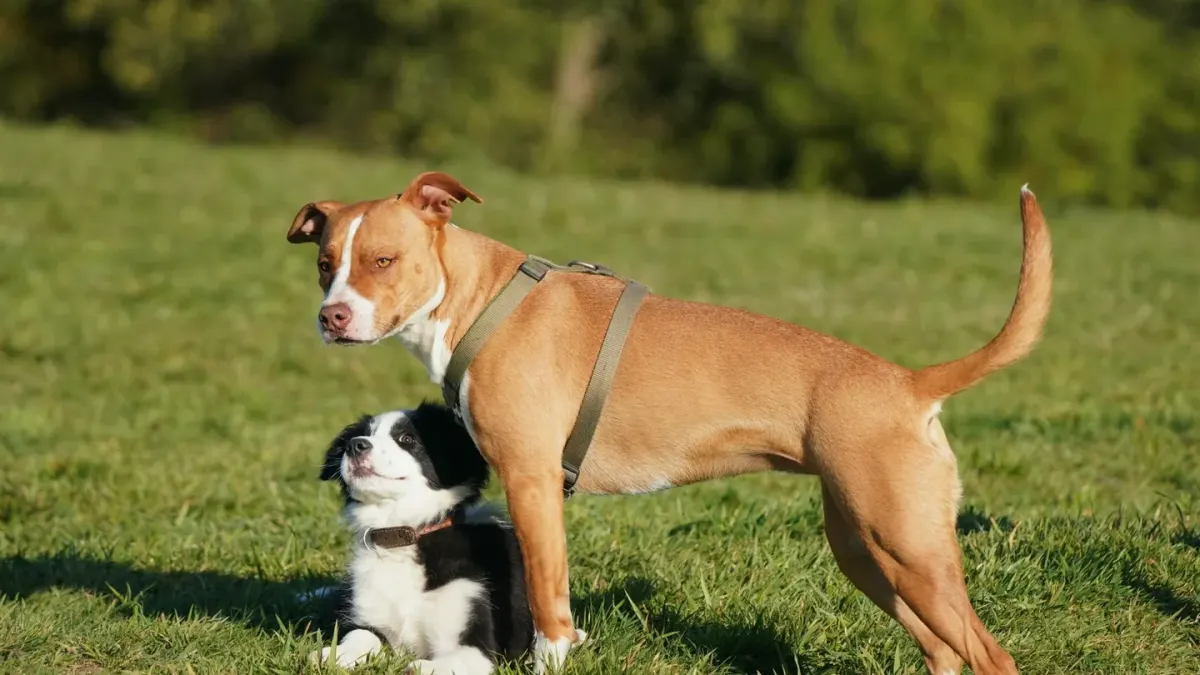
A dog who’s playing looks a little goofy. Movements are bouncy, exaggerated, off-balance on purpose. A dog who’s escalating toward real conflict looks efficient — weight forward, muscles set, nothing wasted. The American Kennel Club notes that a play bow, where a dog drops its front end to the ground with the rear end raised, is one of the clearest signals of playful intent, and it’s usually paired with a loose, wiggly body rather than a stiff one.
Role reversal is the second tell, and it’s the one I trust most. In genuine play, the bigger or faster dog will let itself get “caught,” roll onto its back, or take a turn being chased. Researchers studying dyadic play in domestic dogs have found that this kind of self-handicapping is closely linked to play-signaling behavior — dogs that pin, chase, or mouth also tend to hand the advantage back, which keeps the interaction going rather than shutting it down. A dog that never lets the other dog “win” a round, that keeps stacking advantage on advantage, is telling you something different.
The third check is simple: pause the interaction. Grab a collar, step between them, or just call out. Play resumes with loose wags and another invitation. A dog escalating toward conflict either doesn’t reset, stays fixated, or tries to re-engage stiffly rather than bouncily.
What actual aggression looks like
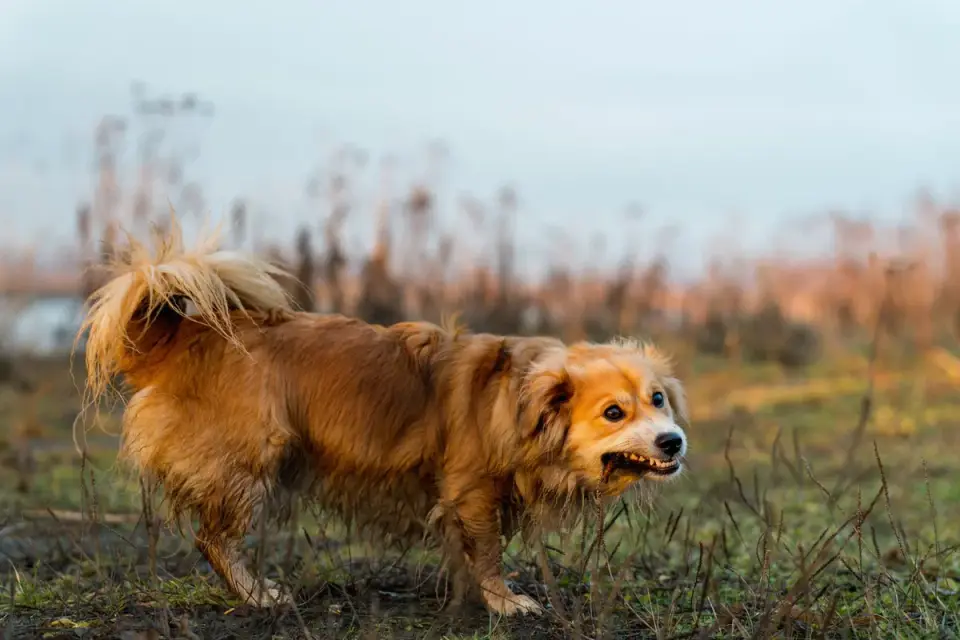
Real aggression has a different rhythm. Watch for a stiff, high tail wagging in short, tight flicks rather than a loose full-body wag. Watch for hackles raised the length of the spine, ears pinned flat, a hard stare instead of the darting, relaxed eye contact of a playing dog. Growling itself isn’t the tell — dogs growl happily during play all the time — but a sustained, low growl paired with a frozen body and no play bow anywhere in the sequence is.
One dog I worked with, a two-year-old Cane Corso named Duke, would go rigid and silent for a full two or three seconds before any interaction turned sour — no bark, no growl, just stillness with his weight shifted onto his front legs. His owner had been reading that stillness as “calming down,” when it was actually the loudest warning sign he gave. Once she learned to intervene at the freeze instead of the growl, the number of tense run-ins dropped from roughly weekly to almost none over about six weeks. I bring Duke up constantly, because that silent freeze is one of the most commonly missed signals I see in practice, and it’s not unique to one breed — it shows up in Corsos, Cattle Dogs, and plenty of mixed breeds who default to a stillness-before-action style.
A note on growling specifically: if your dog growls when handled or petted, not just during dog-to-dog play, that’s a separate conversation worth reading up on — our guide to why dogs growl when petted walks through pain-versus-emotion causes that don’t show up in a park interaction.
The gray zone, and why it’s usually fine
Most rough play lives in a gray zone that makes owners nervous for no real reason. Mouthing that leaves no marks, growly wrestling, one dog pinning another to the ground — all normal, as long as it’s mutual and both dogs keep opting back in. The AVSAB-aligned view most veterinary behaviorists hold today is that dominance-based framing of these interactions (the “alpha dog asserting control”) oversimplifies what’s actually happening, which is closer to a negotiated, cooperative game with its own rules.
Here’s a short paragraph worth sitting with: if both dogs are choosing to come back, it’s play.
That single test resolves more anxious park-bench moments than any list of body-language cues, because owners can apply it without decoding ear position or tail height in the two seconds they have to react.
When one dog is more anxious than sociable
Some dogs don’t fight and don’t fully play either — they freeze, avoid, or get overwhelmed by any dog that plays rough, even in a friendly encounter. That’s less about that day’s interaction and more about a dog’s baseline stress tolerance, which is worth addressing separately from any single play session. In my practice, I’ll sometimes discuss calming support alongside training for dogs who are chronically over-threshold in group settings, not as a fix for a specific fight but as one piece of a broader plan. The evidence base here is modest but real: a review found ashwagandha, in a systematic review of multiple RCTs, has a moderate positive impact on stress reduction, according to Cureus; a separate review of L-theanine found benefit in one study on psychotic anxiety, at a dose of 400 mg/day for eight weeks in humans, per Molecular Psychiatry; and for chamomile, the same review notes that for most species, evidence is derived mainly from preclinical studies or traditional use, according to a review in Biomedicines. None of that replaces reading the dog in front of you or working with a trainer — it’s context for a longer-term conversation, not a substitute for the pause test.
If your dog is the one who can’t settle back into a group after any excitement — sports, guests, other dogs — the deeper pattern is often closer to hypervigilance than to play stress, and it’s worth reading how that shows up separately in our piece on independence training for a velcro dog or, for noise-triggered anxiety specifically, our guide to a dog that panics at the garbage truck.
The bottom line
I still think about that Boxer and the Labrador puppy sometimes, because the owner’s instinct — grab the leash, break it up — was the wrong call for that dog and would have been exactly right for a different one thirty feet away with a stiffer tail and a harder stare. There’s no single body part to watch. Loose and bouncy with a play bow and mutual re-engagement is play. Stiff, fixated, one-sided, and unwilling to reset is not.
Practical next step: watch for thirty seconds before you react. Check the tail stiffness, check whether either dog is trying to disengage, and do the pause test if you’re unsure. If a dog goes still and silent rather than loud and loose, treat that stillness as the warning sign — it usually is one.
Frequently asked questions
Is growling always a bad sign during dog play?
No. Dogs often growl happily during rough play, especially wrestling and tug-style games. What matters more is whether the growl comes with a loose, bouncy body and mutual re-engagement, or with a stiff, frozen posture and no play bow anywhere in the interaction.
What's the fastest way to check if two dogs are actually fighting?
Pause the interaction — grab a collar or call out — and see what happens. Dogs that were playing usually bounce back into it with loose body language. Dogs escalating toward real conflict often stay fixated, tense, or try to re-engage stiffly.
Should I ever separate dogs who look like they're just playing rough?
Yes, if one dog is repeatedly trying to disengage and the other won't let it, or if you see a stiff, high tail with short flicks, raised hackles, and a hard stare with no play bow. One-sided play is worth interrupting even if it started out mutual.
Sources
- Are Dogs Playing or Fighting? How to Tell the Difference — American Kennel Club
- KSM-66 Ashwagandha systematic review on stress reduction — Cureus
- L-theanine and anxiety: a review — Molecular Psychiatry
- Chamomile and anxiety/stress evidence review — Biomedicines