Shelf-Stable vs. Refrigerated Dog Probiotics: What Actually Determines CFU Viability
Medically reviewed by Donna Hein, DVM, CVA, FAAVA, CVCH, CVTP, CVFT, CVMMP, MSTCVM, MSIVM — For general education — not a substitute for veterinary care.
Shelf-stable versus refrigerated CFU viability depends more on the probiotic strain than on where the bottle sits.

On this page
Reeva, an 8-year-old, 52-pound German Shepherd mix, came into my exam room on a gray February afternoon because her owner had switched probiotic brands twice in six months and couldn’t figure out why the new one “didn’t seem to be doing anything.” The old product had lived in her refrigerator door, wedged between the mustard and the dog’s ear-cleaning solution. The new one sat on the counter, unrefrigerated, and Reeva’s soft stool — which had firmed up nicely on the first product — had gone loose again within about ten days of the switch. Her owner assumed the counter product was simply weaker. It wasn’t necessarily weaker. It was a different organism, made to survive a different way, and nobody had explained the difference to her before she bought it.
That’s the pattern I want to walk through here, because it comes up in my practice more than almost any other supplement question: does a probiotic need to be cold to work, and if it doesn’t, is it cutting corners?
What Actually Survives the Trip From Bottle to Bowl
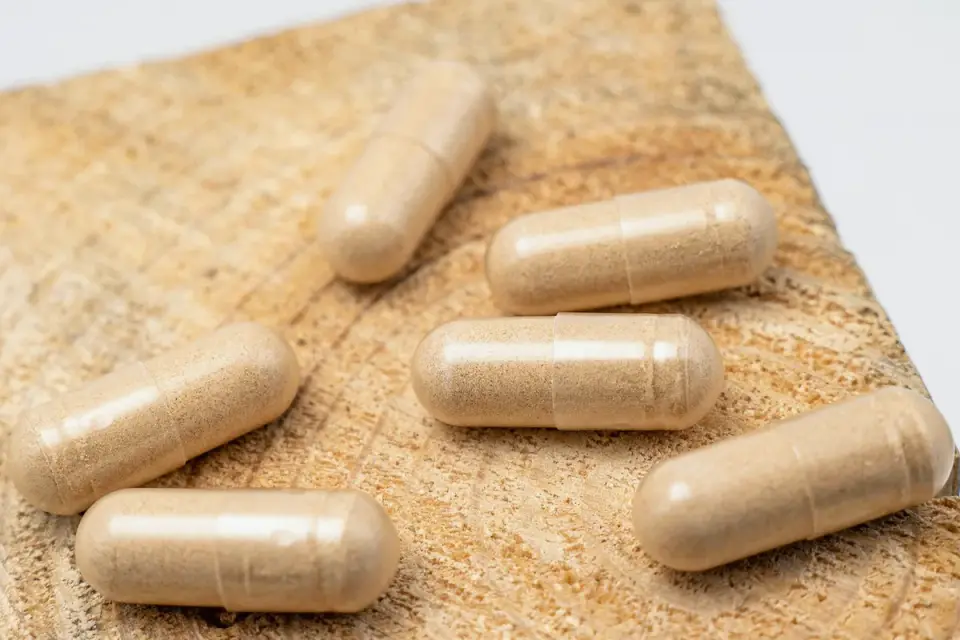
The honest answer is that “shelf-stable” and “refrigerated” describe two different survival strategies, not two different quality tiers. Spore-forming organisms — Bacillus coagulans and Bacillus subtilis are the two you’ll see most often on dog labels — form a protective coat around their genetic material that lets them shrug off heat, stomach acid, and months at room temperature. Non-spore-forming genera, mainly Lactobacillus and Bifidobacterium strains, don’t have that armor. They’re metabolically active from the moment they’re packaged, which is exactly why cold slows their die-off and heat accelerates it.
A peer-reviewed overview in the Current Research in Nutrition and Food Science Journal lays this out clearly: it’s the spore’s ability to withstand commercial processing, extreme pH, bile salts, and prolonged storage that makes B. coagulans useful in shelf-stable formats where a non-spore-forming strain would already be dying off. That’s not a marketing claim — it’s basic microbiology, and it’s the reason a counter-stable capsule isn’t automatically the cheaper, weaker option.
The Label Line That Actually Tells You Something
Here’s where I ask owners to stop reading the front of the bottle and start reading the fine print near the supplement facts panel. The number that matters is not the CFU count at the moment of manufacture — it’s whether that count is guaranteed through the expiration date. Most probiotic organisms decline over shelf life regardless of format, and reputable manufacturers overfill the batch to account for that decline so the labeled dose is still accurate the day before your dog finishes the bottle. A label that only promises CFUs “at time of manufacture,” with no expiration guarantee, is telling you almost nothing about what your dog will actually receive months from now.
This is the same logic behind why I keep steering clients toward brands that document their manufacturing process rather than just their marketing claims — the same instinct that matters when comparing cGMP Certification vs. NASC Membership for Dog Supplements, where the certification tells you about the factory, not the formula. A CFU-through-expiration guarantee is the probiotic-specific version of that same question: is this company willing to be held accountable for what’s in the bottle on the day you actually use it?
Where Refrigeration Still Wins
I don’t want to overcorrect into “shelf-stable is always better,” because it isn’t. Some non-spore-forming strains, particularly certain Lactobacillus and Bifidobacterium species used for specific GI patterns, have supporting research that spore-formers simply don’t have yet for that exact indication. If a refrigerated product is the one with strain-specific data behind it, cold storage is a small price for a better-supported organism. The trade-off is real, and dismissing refrigerated products outright would be its own kind of oversimplification.
One short truth I tell every owner who asks: a warm car is worse for either kind of probiotic than a cold refrigerator ever is. Heat is the universal enemy; refrigeration is just one tool for managing it.
The One Pattern I Use to Sort Every Probiotic on the Shelf
In my own practice, I’ve stopped treating “shelf-stable versus refrigerated” as the real question, because it isn’t the variable that predicts whether a probiotic will help support a dog’s gut. I organize every product I evaluate around one pattern instead: organism first, storage second, dose third. What’s the strain, is it named down to the strain level rather than just the species, does the label guarantee potency through expiration, and only then does it matter whether that guarantee depends on your refrigerator door. A shelf-stable spore-former with a documented CFU-through-expiration claim and dosing data behind it will outperform a refrigerated product with vague labeling every time — and the reverse is also true. Storage format is downstream of those three questions, not a substitute for asking them.
I saw this play out with a 6-year-old, 61-pound Labrador named Otis whose owner brought him in during late summer because his stool had gone soft and mucus-flecked after a boarding stay. She’d read that refrigerated probiotics were “the real ones” and switched him from his usual shelf-stable B. coagulans product to a refrigerated Lactobacillus blend she found online, without checking whether it named strains or guaranteed potency through its expiration date. Three weeks in, nothing had changed. When we went back to his original product — chosen because the label specified the strain, the CFU-through-expiration guarantee, and a dose that matched his weight — his stool firmed back up over about two weeks. The lesson wasn’t that shelf-stable beats refrigerated. It was that the label details she’d skipped mattered more than the temperature the bottle needed.

How to Check This Yourself Before You Buy
A few things I ask owners to look for regardless of which format they’re choosing: the strain listed down to the specific designation (not just “Bacillus” or “Lactobacillus”), a CFU count guaranteed through the expiration date rather than at manufacture, and a manufacturer that’s transparent about third-party testing. If you’re also weighing a prescription-strength option your vet has recommended against an over-the-counter product, the differences run deeper than CFU count alone — our guide on Prescription vs Over-the-Counter Dog Probiotics walks through what actually separates the two categories.
Dose matters too, and it isn’t always intuitive. Research on Bacillus coagulans GBI-30, 6086 in healthy adult dogs, published in Microorganisms, found that a lower daily dose (5 × 10⁸ CFU) produced modestly better fecal scores and higher levels of beneficial bacteria like Faecalibacterium than a five-times-higher dose (2.5 × 10⁹ CFU) in the same 12-dog crossover study — a reminder that more CFUs is not automatically a better outcome, and that dosing claims deserve as much scrutiny as storage claims.
Where I Land, and the Case Against It
My actual recommendation: for most healthy adult dogs, I favor a shelf-stable, spore-forming product with a named strain and a CFU-through-expiration guarantee, mainly because it survives the real world — a car trip, a boarding kennel, a forgotten bottle on the counter — better than a refrigerated one does. The strongest counterargument is that some refrigerated, non-spore-forming strains simply have better strain-specific research behind them for particular issues, like certain diarrhea or dysbiosis patterns, and in those cases I’ll recommend the refrigerated product and tell the owner exactly how to store it. I’m not against refrigerated probiotics. I’m against choosing a format before asking what the organism, the label, and the dose actually say.
Going forward, I expect more brands to publish CFU-through-expiration data as owners start asking for it, the same way NASC membership and cGMP certification became expected rather than exceptional over the past decade. Until then, the pattern holds: check the organism, check the guarantee, check the dose — and only then check where the bottle needs to live.
Frequently asked questions
Does a shelf-stable dog probiotic mean it's lower quality than a refrigerated one?
No. Shelf-stable products typically use spore-forming organisms like Bacillus coagulans, which are built to survive room temperature, processing heat, and stomach acid. Refrigerated products usually contain non-spore-forming strains like Lactobacillus, which need cold storage to slow their natural die-off. Neither format is inherently better — the strain and the label's CFU-through-expiration guarantee matter more.
What's the most important thing to check on a dog probiotic label?
Look for the CFU count guaranteed through the expiration date, not just at time of manufacture, and confirm the strain is named specifically rather than just listed by genus.
Can heat destroy a shelf-stable probiotic anyway?
Yes. Spore-forming strains tolerate far more heat than non-spore-forming ones, but extreme heat — a hot car in summer, for example — can still degrade any probiotic over time.
Sources
- Bacillus Coagulans and its Spore as Potential Probiotics in the Production of Novel Shelf-Stable Foods — Current Research in Nutrition and Food Science Journal
- Effects of Bacillus coagulans (GBI-30, 6086) Supplementation on the Fecal Characteristics and Microbiota of Healthy Adult Dogs Subjected to an Abrupt Diet Change — Microorganisms