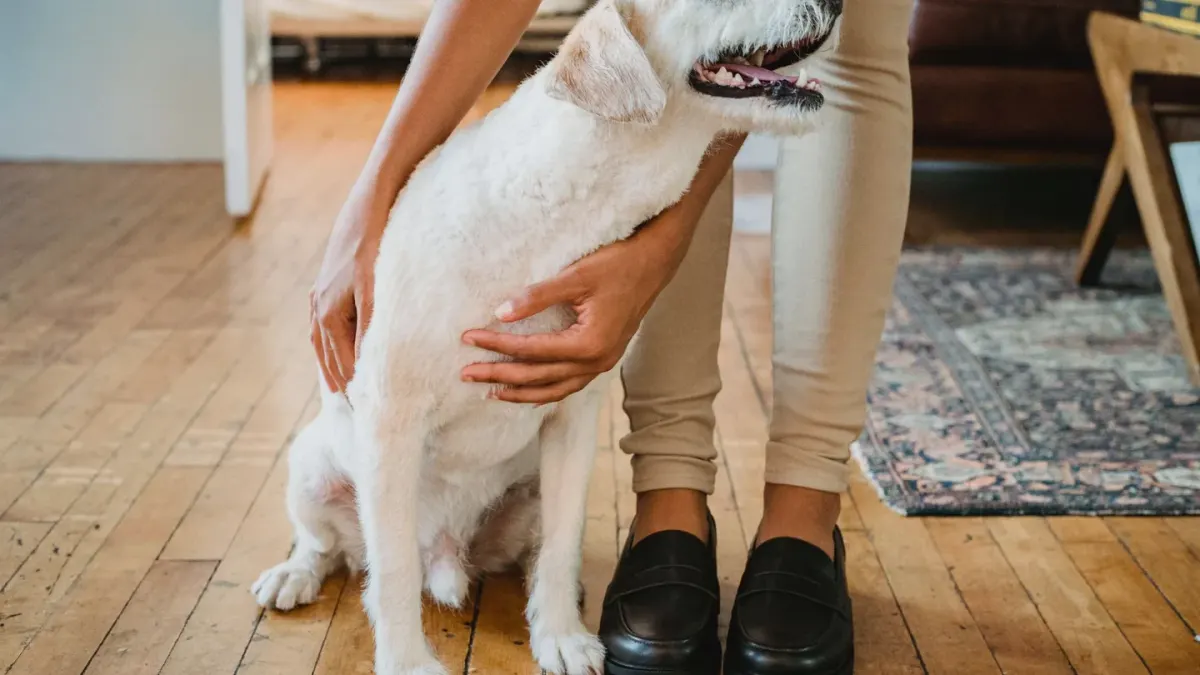
The first night home is often harder on the family than on the dog. She is groggy, sore, and strangely quiet. You keep checking whether she is breathing, whether the bandage slipped, whether you should offer water again. That worry is useful when it has somewhere to go, and the rest area gives it shape.
She was a nine-year-old Labrador, 68 pounds, home twelve hours after a cruciate repair. Her family had prepared a spare bedroom with a thick orthopedic bed, a closed door to keep things quiet, and a camera to check from the couch. By midnight she was whining at the door and had not settled, and her breathing stayed fast until they moved a low exercise pen into the living room beside the sofa. Within an hour, with her head near a familiar foot and the room dim, her respiratory rate fell to 28 breaths per minute and she slept. The decision that mattered was not the mattress. It was proximity without freedom.
After anesthesia and tissue trauma, the body needs stillness to close what surgery opened. Blood vessels seal, a soft clot organizes, and inflammatory cells clear debris before collagen can bridge the incision. Movement pulls at those early bonds. Pain raises heart rate and muscle tension, which pulls more. A good rest area lowers both sides of that cycle by limiting steps, slips, and startle, while keeping pain signs visible so medication can be adjusted. The American Veterinary Medical Association describes pain management as central to recovery, and watching posture, appetite, and restlessness in one consistent place makes that assessment possible.
Where the pen belongs during the first days
Think of the first three to five days as intensive observation in a small footprint. A pen or gated corner in the lived-in room works better than a distant bedroom for most dogs. You want a non-slip floor, walls that prevent jumping but allow air, and enough space to stand, turn, and lie fully on the side. Keep the leash by the gate for every potty trip. Carry support under the belly for a large dog on stairs, and block stairs entirely when you cannot supervise.
Light and sound matter more than owners expect. Low evening light, a steady room temperature, and household murmur help maintain comfort better than total silence followed by sudden noise. Place water within head reach without forcing the dog to stand to drink, and offer small, bland meals as directed. Guidance on VCA Hospitals emphasizes restricted activity, incision monitoring, and following discharge instructions closely, and all three are easier when the dog rests where you already spend time.
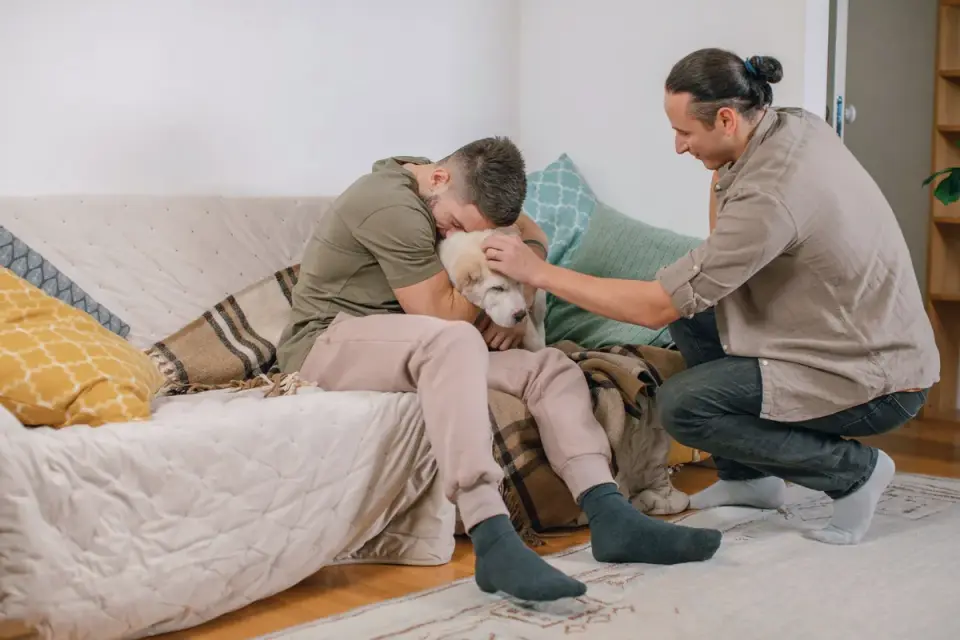
Healing is quiet work.
Bedding should be flat, washable, and low. Thick donut beds and piled blankets look kind, and they can trap heat, hide drainage, and give an unstable leg something to twist on. I prefer two thin layers: a waterproof pad below and a cotton blanket or towel above that can be swapped daily. Check the incision twice daily for swelling, heat, odor, opening, or new discharge, and note appetite, urination, and stool in the same spot each time. For dogs that drink little when sore, these ideas for encouraging water intake can help you track what is normal without hovering.
Why the second week tests even good setups
He was a four-year-old French Bulldog, 24 pounds, neutered with a small scrotal incision that looked nearly healed. By day 5 his energy returned, and the family, tired of confinement, let him nap loose on the couch while they cooked. He slid off chasing a dropped spoon, yelped, and licked for ten minutes before they noticed. By day 6 the lower edge was pink and moist, with a pea-sized spot of discharge on the sheet, and he needed an extra recheck and five more days of collar wear. The tradeoff was clear in hindsight. Freedom felt like kindness, and it cost him comfort.
This is the strongest counterargument to strict confinement, and it deserves honesty. Some dogs pant, pace, or shut down in a pen, and stress itself slows rest and raises cortisol. A run of the house can look calmer in the moment. I still land on contained rest with planned company, because the most common setbacks I see — slipped footing, couch jumps, unsupervised licking, missed swelling — happen during brief unguarded minutes, not during the night. If the pen causes distress, shrink the problem differently. Sit with him for short periods, move the pen closer, dim the room, offer a chew only if the surgeon allows it, and ask the clinic about anxiety or pain before you widen the boundary.
Keep the collar or suit on as prescribed even when the wound looks clean. Most licking happens when you step away. Keep other pets separate but within scent range, and rotate one calm human at a time rather than inviting visitors into the pen. If your dog takes daily supplements, review timing with the discharge team, including questions like how soon before surgery to stop a dog’s longevity supplement, since restart dates after surgery are rarely automatic.
When age or worry changes the plan
She was thirteen, 41 pounds, a shepherd mix with mild cognitive change and a mammary removal that required two weeks of leash-only movement. Three weeks in, long after the sutures were out, she still chose the pen over the bedroom and paced when the gate was left open at night. Her family worried they had created dependence. What had changed was subtler. In the pen she could find water without crossing slick wood, stand without being bumped by the younger dog, and see her person from the bed. For an older dog with less to spare, the smaller map was not restriction. It was orientation.
Edge cases ask for small edits, not a different philosophy. For a dog with arthritis, add a ramp over one threshold and keep the overnight pen on the floor where you sleep. For a brachycephalic or heavily coated breed, favor breathable bedding and cooler room air over extra blankets, and watch panting separately from pain. For a multi-dog home, feed the patient in the pen and let housemates sniff the bedding on rotation rather than crowding the gate. If you are also adjusting meals during low activity, this note on should you feed less on rest days is a useful frame to bring to your veterinarian, not a rule to apply alone.
In the final third of recovery, let the recheck set the pace. Most incisions are evaluated around ten to fourteen days, and activity increases in steps after that, not all at once. Keep the pen up until the surgeon clears stairs, off-leash time, and baths. Then keep it available for another week as a chosen resting place. A dog who walks willingly to the gate, lies on the side with soft eyes, and eats and eliminates normally is telling you the space did its work.
A steady corner, kept close and kept boring, may help support a calmer return to normal life.
Frequently asked questions
How small should the rest area be after surgery?
Large enough to stand, turn around, and lie fully on the side, with water in reach and a non-slip surface. Avoid extra room to pace, jump, or build speed.
Should the dog recover alone in a quiet room?
Most dogs settle better in a pen within the family room than in isolation. Keep light low, noise steady, and visits calm so you can notice appetite, breathing, and incision changes early.
When can confinement end?
When the surgeon clears it, often after the ten to fourteen day recheck, with activity increased gradually. Keep the pen available a little longer as a familiar resting place.
Sources
- Pain Management in Pets — American Veterinary Medical Association
- Post-Operative Care in Dogs — VCA Hospitals