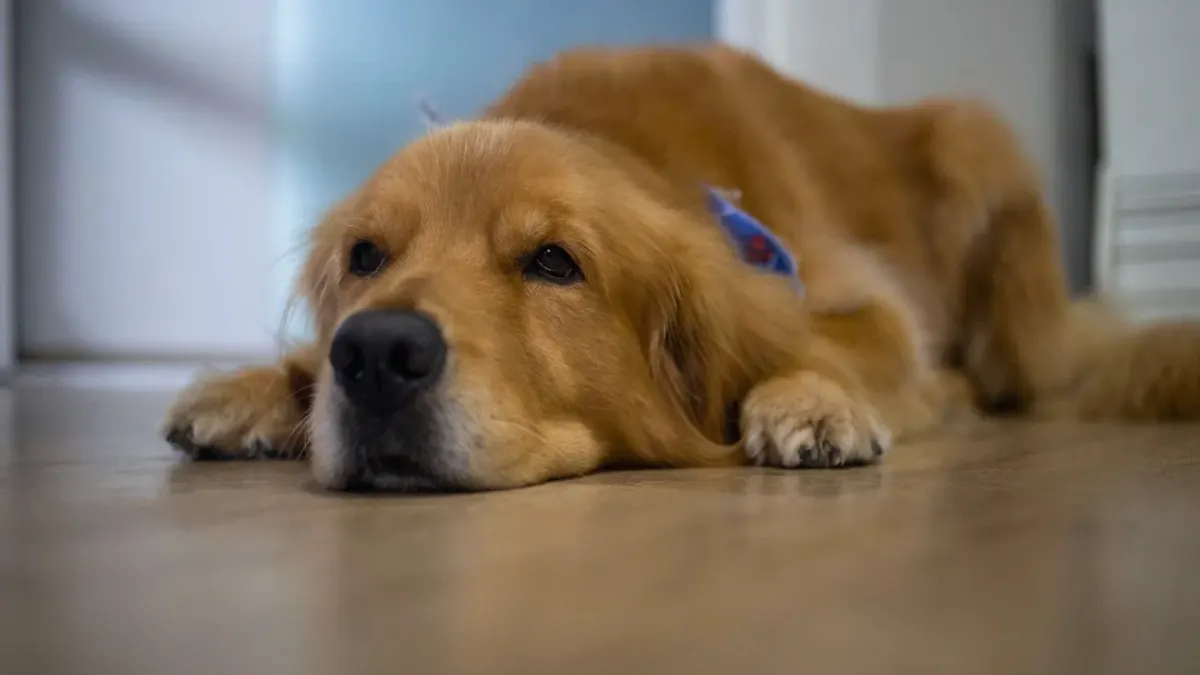
You pull into the driveway with the AC still blasting and a 5-year-old, 68-pound Labrador panting hard in the back seat. He has been curled on a blanket for four hours, had two short potty stops, drank a little water, and now will not settle when you unclip the harness. You want to offer a big bowl of water, a full dinner, and a quick walk to stretch his legs. That order is the decision that matters most after heat plus highway time, because cooling and calm recovery come before food and exercise.
This first hour sets the baseline. Dogs do not sweat like people do, and a car that felt comfortable up front can still leave the back seat warm and stuffy. Panting, drool, warm ears, and restlessness are common after a long ride. My expectation first when I counsel owners: assume your dog needs 30 to 60 minutes of quiet cool-down before you judge how he really feels.
Take him straight somewhere shaded and cool. Keep the house or a shaded room cool, offer a mat or tile floor, and let him lie down. Offer small amounts of cool — not ice-cold — water every 10 to 15 minutes rather than one huge bowl. The American Veterinary Medical Association notes that heat risk rises fast in warm conditions and that shade and water are core prevention, which is why I prioritize them before anything else.
Let him cool down before you do anything else
Skip the welcome-home walk. Skip the bath. Skip dinner for now.
Keep handling low-stress. Loosen a tight harness, check paws for hot pavement tenderness from rest stops, and look for rubbed spots where a seat belt or crate door pressed. Feel his breathing without hovering. Resting respiratory rate should trend down as he settles. If panting stays heavy after 30 minutes in a cool room with water available, that is your signal to call your veterinary team for triage advice.
Light airflow may help support comfort. A fan across the room, a cool damp towel to lie near rather than wrapped tightly around him, and quiet company work better than active cooling for most dogs. The tradeoff owners miss is water temperature and volume. Very cold water or gulping gallons can upset the stomach and bring it right back up, which only delays rehydration.
You tried the opposite last summer with a 3-year-old, 42-pound mixed-breed who rode six hours to the lake and back. By day 1 at home she seemed fine, so you gave a full dinner right away, then a long evening walk to tire her out. Three hours in she vomited undigested kibble, panted through the night, and refused breakfast. It was not an emergency, but it was avoidable. The failed approach was stacking food plus exercise on top of heat fatigue and motion fatigue. Her gut needed time, her muscles needed rest, and excitement masked how tired she was until she crashed.
Water, rest, then food in that order
Once panting eases, keep water available in normal amounts. Then let him sleep.
Most dogs benefit from a true nap before a meal. Offer a half-portion of the regular dinner about one to two hours after arrival if he is calm, drinking, and interested. That smaller meal tests appetite and digestion without overloading the stomach. If he eats and holds it down, resume a normal schedule at the next meal. For context on appetite shifts in heat, see Does Your Dog Need Less Food in Hot Weather?
Short sentences help here. Quiet is treatment.
A brief potty walk on grass is enough. Keep it five to ten minutes, in shade, on a loose leash. Watch gait, energy, and stool. Soft stool after travel is common and often reflects stress, schedule change, and different water. Straining, bloody diarrhea, repeated vomiting, or lethargy that does not lift with rest deserves a call that day.
Watch the overnight window and the next day
The edge case I see is the 9-year-old, 14-pound senior who looks completely normal by 8 p.m. after a five-hour drive. She drinks, eats half a meal, wags, and curls up. By day 2 she is stiff getting off the bed, coughs after drinking quickly, and seems dull on the morning walk. Heat plus vibration plus holding one position for hours hits older dogs later. Arthritis stiffness, mild dehydration, and poor sleep combine overnight. For her, the right application is different: ramp down, orthopedic bed, night-time water nearby, no stairs if you can help it, and a shorter morning route with time to sniff.
Heat illness can also evolve. The National Weather Service emphasizes how quickly heat builds and how recovery takes time, and dogs follow the same principle. Check gums, skin elasticity, and behavior the next morning. Pale or brick-red gums, thick drool, wobbliness, vomiting, diarrhea, or a dog that still seems flat after a full night of rest should prompt veterinary care promptly.
Keep it preventive with realistic timelines. One quiet evening may help support normal recovery for most healthy adults. Seniors, brachycephalic breeds, puppies, and dogs with heart or airway disease often need 24 to 48 hours before energy, appetite, and stool look like baseline. Track what you see — water intake, meals kept down, walks, rest — so you can report a clear pattern if you call.
If you are planning another leg, travel recovery is part of trip planning. Review crate ventilation and rest-stop timing in How to Fly With a Dog: The Complete Guide for transferable ideas on airflow and breaks, even for road trips, and keep feeding changes minimal. Guidance on holding steady after a diet disruption can help here: What to Do After Successfully Switching Your Dog’s Food
Forward-looking rule for the next hot drive: cool, sip, sleep, then feed. When that order holds, most dogs wake up the next morning ready to be themselves again.
Frequently asked questions
Should I feed my dog right after a long hot drive?
Wait until panting slows and your dog rests, usually 1 to 2 hours, then offer a half-portion of the regular food and resume normal feeding at the next meal if it stays down.
How much water should I offer after the drive?
Offer small amounts of cool water every 10 to 15 minutes at first, then free access once breathing settles. Avoid ice water and letting a panting dog gulp a huge bowl at once.
When should I call the vet after hot-weather travel?
Call promptly for heavy panting that does not ease within 30 minutes in a cool place, vomiting or diarrhea more than once, wobbliness, pale or brick-red gums, or lethargy that persists after overnight rest.
Sources
- Warm Weather Pet Safety — American Veterinary Medical Association
- Heat Safety — National Weather Service